

As a boat climbs from sea level to high elevations, the engine produces less power because there is less oxygen in the air. This is especially noticeable in high altitude lakes, where your boat propeller may not respond as it does at lower elevations. Many boat owners wonder how higher or lower pitch propellers for altitude affect acceleration, handling, and top speed. Understanding how prop pitch interacts with elevation helps you choose the right propeller pitch for optimal performance. While all boats react to altitude differently, the way propellers influence the engine’s RPM range, thrust, and load stays consistent. Let’s learn more about higher or lower pitch propellers for altitude on a boat.
Why Altitude Changes the Way a Boat Propeller Performs
At higher elevations, engines, both fuel-injected and carbureted, get less air for combustion. This is similar to mild altitude sickness: the engine cannot breathe as deeply. Lower air density reduces power and directly affects performance.
When the engine has less power, the boat propeller may not reach its intended max RPM. Lower thrust means reduced hole shot, slower acceleration, and difficulty holding speed at cruise. Adjusting propeller pitch can help the engine return to its intended RPM range.
Understanding Propeller Pitch
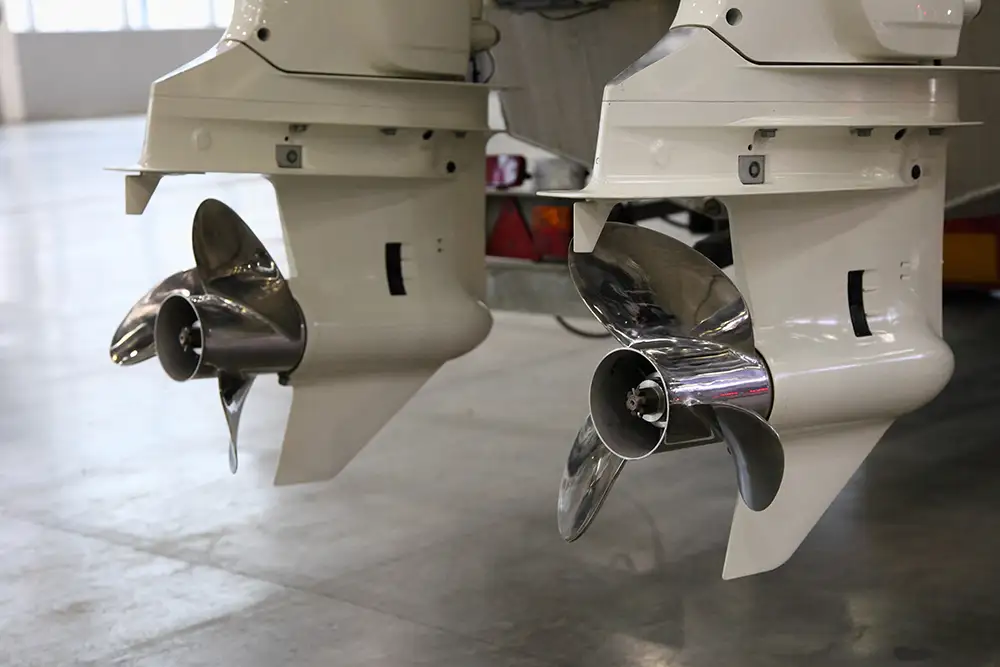
Prop pitch refers to how far a propeller would theoretically travel in one full rotation (assuming no slippage). For example:
- A higher-pitch propeller moves a boat farther per turn.
- A lower-pitch propeller moves it a shorter distance per turn.
A higher pitch prop generally supports top speed at sea level, but it requires more power to turn. At high altitude, the boat engine may not have enough power and struggle to hit maximum RPM. A lower pitch prop is easier for the engine to turn, improving acceleration and allowing your boat to reach the correct RPM range even when the engine is producing less power.
Lower Pitch At High Altitude
Most boat owners on high-altitude lakes or mountain reservoirs use a high-altitude prop. This generally means dropping down to a lower pitch prop. The benefits of a lower pitch at altitude are:
- Helps reach the recommended RPM range
- Quicker hole shot
- Easier planning at lower speeds
There are also some drawbacks, such as:
- Slight reduction in top speed at cruise
But since the boat engine can’t produce full power anyway, chasing top speed becomes less important than achieving stronger acceleration and consistent performance.
Higher Pitch At Lower Elevations
When returning to lower elevations, many boatmen switch back to a higher-pitch propeller. With more air available for combustion and more power output, the boat engine can easily turn the prop and push for maximum top speed. If you keep the lower pitch prop at lower elevations, you may run into:
- Hitting the maximum RPM too quickly
- Wastage of the fuel
- Extra stress on internal components
This is why it is common for experienced boaters to own more than one prop for changing conditions.
The Role of Larger Diameter & Blade Size
Another factor is the diameter of the propeller. Some boat manufacturers pair high-altitude models with larger diameter propellers to increase bite in thinner air. However, changing the diameter alters the load, so most boat owners adjust the propeller pitch instead, which is more predictable and easier to manage.
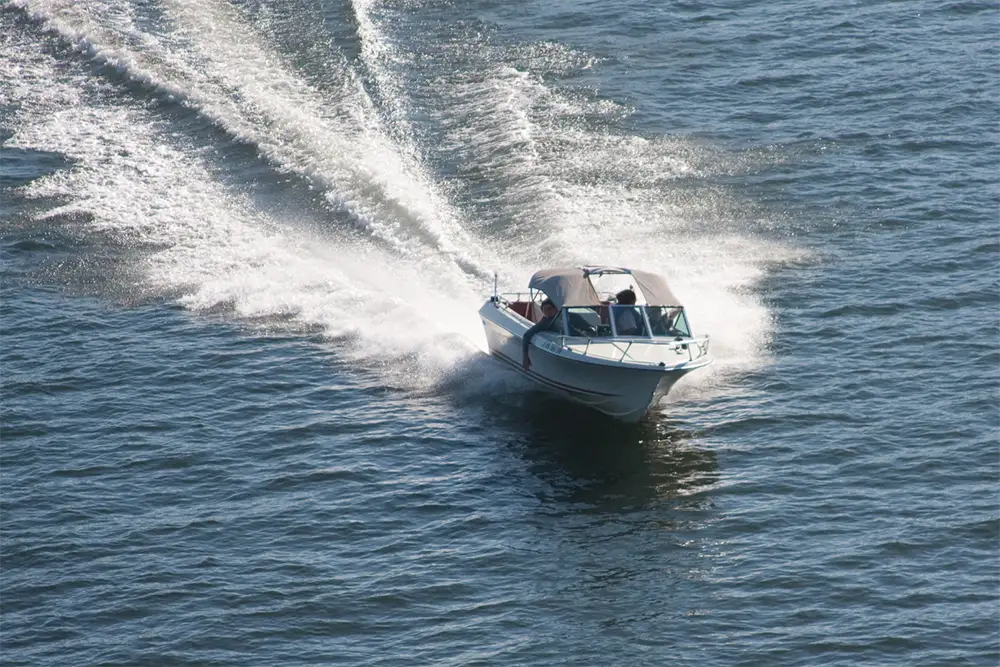
Recognizing When Altitude Requires a Prop Change
If the engine won’t reach its maximum RPM, it suggests your boat is working too hard, and switching to a lower-pitch propeller may help. Conversely, if the boat engine hits the redline prematurely, it indicates that it’s turning too freely, and a higher-pitch prop could be necessary.
At higher altitudes, struggling to plane at lower speeds may be due to insufficient thrust. Installing a lower-pitch propeller might improve performance. If you notice a loss of top speed only at sea level, your engine could be over-revving, and switching to a higher-pitch propeller could resolve this.
Always consult your owner’s manual to find the recommended RPM range for your boat engine and choose your propeller accordingly.
Why High Altitude Prop Selection Matters
At high altitude, the boat engine’s reduced output means some performance loss is unavoidable, but you can control how much loss occurs. The right propeller pitch adjustment lets your boat stay closer to its factory-level power band.
Changing the pitch of the propeller for elevation does not modify the engine. It allows the propeller to match the engine’s altered power curve, giving better performance at that location.
Conclusion
Choosing between higher or lower pitch propellers for altitude on a boat depends on
- Elevation
- How the engine performs in those conditions.
If you are cruising at sea level, a higher-pitch propeller helps you reach top speed. At high altitude, a lower pitch prop or high altitude prop helps regain lost acceleration and keeps your engine in its recommended RPM range.
Adjusting propeller pitch is one of the most reliable ways to adapt performance when boating across changing elevations. If your boat is over-revving at the coast or feels sluggish in the mountains, switching prop pitch may restore balance.
Call Prop Depot for New & Used Boat Propellers
Make your boating experience more enjoyable and safe with the perfect propellers. Call Prop Depot, a premier Tennessee propeller company and authorized dealer for top brands like Mercury, ACME, OJ, Powertech, and Solas. Be it new outboard and sterndrive propellers, aluminum props, or demo and used options, Prop Depot has it all. We offer cruiser and pod drive propellers, along with essential marine accessories and prop pullers.
But that’s not all! We are also your go-to source for expert repairs on a variety of propeller types, such as Acme and OJ prop repairs, as well as specialized services for stainless props, Volvo IPS, and more. We understand how crucial it is for your prop to match the boating environment for optimal performance. Don’t leave your boating experience to chance—call Prop Depot today and let their experts help you find the right prop pitch for your needs. Your boat deserves the best, and so do you!