
What Propeller Helps With Boat Handling in Rough Water?
If you’ve ever taken your boat out on a windy day, you already know how quickly the water can turn from manageable to choppy. When the conditions start to get rough, having the right propeller can make the difference between a smooth ride and constantly fighting your steering wheel. But the real question is: what propeller helps with boat handling in rough water? The truth is, your prop has a massive impact on boat performance, engine power, hole shot, fuel efficiency, top speed, and overall control. Let’s break down what improves handling when the waves pick up, and how to pick the best propeller for the way you boat.
Why Rough Water Requires a Different Approach
Before diving into prop types, it helps to understand how rough conditions affect your boat.
In choppy water:
- The bow tends to rise more often.
- Water flow to the prop becomes inconsistent.
- The hull may pound or slap the water.
- Maintaining low speed control becomes harder.
- Your boat’s motor may struggle to stay in its recommended RPM range.
- You need more bite, more stability, and more thrust to stay in command.
This is where the right boat propeller setup begins to matter. You want a prop that provides:
- Enhanced control
- Consistent performance
- Quick acceleration
- Smoother ride
- Improved handling at lower speeds
Why a 4-Blade Propeller Performs Better in Rough Water
When it comes to rough water, a 4-blade propeller is widely considered the best choice. Here’s why:

More Blades Means More Grip
Compared to a 3-blade prop, a 4-blade design offers more blades and therefore more consistent water contact. This increases bite and stability when the boat is rocking or dipping between waves.
Better Low-Speed Control
Rough water often forces you into lower speeds where 3-blade props can slip or lose traction. 4-blade props maintain a far better grip.
Improved Holeshot & Better Acceleration
The extra blade provides rapid acceleration, especially helpful when you need to power out of a trough or reposition quickly.
Smoother Ride
More blades typically equal less drag, smooth operation, and a smoother ride in messy water.
Ideal for Heavier Boats
If you run heavier boats, fishing boats, or recreational boats loaded with gear, you’ll feel the improvement immediately. This doesn’t mean 3-blades are bad; they’re great for high-speed boats chasing maximum top-end speed. But for handling rough water, 4-blade props win almost every time.
Stainless Steel vs. Aluminum Propellers in Rough Water
Material matters when you’re trying to maintain control in unpredictable water.
Stainless Steel Propellers
- Provide optimal performance
- Offer more power and extra power for climbing waves
- Maintain shape better under high load
- Improve consistent performance and better handling
Their stiffness allows the prop to cut through disturbed water and maintain thrust, making stainless a top choice for rough-water performance boats.

Aluminum Propellers
- Lightweight
- Cost effective
- Good for casual boaters
- A common pick for recreational boats
While aluminum works fine for everyday boating, it flexes more under load. This can reduce performance when the water turns ugly. If your primary concern is staying in control in rough conditions, stainless steel propellers are usually the better choice.
Prop Diameter & Rough-Water Stability
Prop diameter (the size of the circle the prop traces) directly affects handling.
- A larger diameter propeller grabs more water, giving you more thrust.
- A larger diameter helps you maintain control at slower speeds and in turbulent water.
- Many 4-blade models feature a slightly larger diameter for this reason.
In rough water, more bite means more confidence. Smaller diameters are great for speed, but a larger diameter gives the prop better authority when conditions get messy.
Prop Pitch & Why “Higher” Isn’t Always Better
Pitch refers to how far the prop would theoretically move forward in one full rotation.
- A higher-pitch propeller gives you high speeds and strong performance at the top end.
- A lower pitch provides quick acceleration, a better hole shot, and improved control at lower speeds.
When in rough water, you should avoid too little and too high propeller pitch.

Avoid “Too Little Prop Pitch.”
Your engine could over-rev and fall out of its RPM range, which hurts efficiency.
Avoid “Too High Prop Pitch.”
You’ll lose acceleration, which makes it harder to climb over waves or react quickly.
The ideal option is often the same pitch your engine manufacturer recommends, but paired with a different blade count or diameter to suit the conditions. Always aim to stay within your engine’s recommended RPM range for efficient operation, better fuel economy, and overall performance.
Why Cupped Propellers Help With Control
Cupped propellers feature small curved sections at the blade tips to improve water grip. They help with:
- Better control in turns
- Reduced slip in aerated or choppy water
- Improved handling at mid-range speeds
- Increased efficiency
In rough water, cupping can prevent ventilation and give you the traction needed to keep the bow steady.
Matching Your Propeller to Your Boat’s Design & Boating Style
The right prop depends not only on water conditions but also on:
- Your boat’s design
- Your engine power
- Your typical load
- Whether your trips involve fishing boats, cruising, or watersports
- Whether you prioritize top speed, fuel economy, or better handling
- Your intended use and boating style
For instance:
- Performance boats may still lean toward higher-pitch stainless props.
- Casual boaters might choose an aluminum 4-blade for balance.
- Heavier boats benefit from a larger diameter and more blades.
- Heavy loads demand props with stronger bite and thrust.
The key is choosing a setup that gives you an efficient ride, efficient operation, and control across a range of conditions.
When in Doubt, Talk to a Prop Expert
Propeller selection can get technical, especially when you’re adjusting for rough-water handling. A professional can help you:
- Determine the best prop for your boat
- Compare 3-blade vs. 4-blade options
- Choose between stainless steel and aluminum
- Understand pitch, diameter, and cupping differences
- Get a prop repaired, adjusted, or tuned
- Match your boating style, load, and water conditions
A trusted prop specialist can help you quickly identify issues you may not even know you’re facing.
Final Thoughts: Rough-Water Handling with the Right Prop
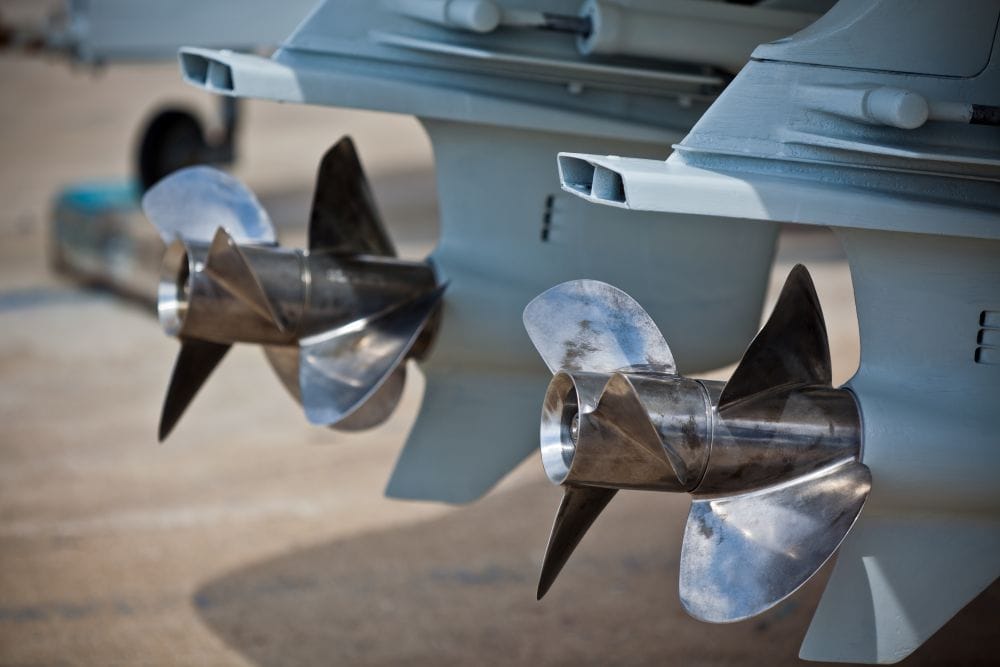
So, what propeller helps with boat handling in rough water? In most cases, a 4-blade stainless steel propeller with the correct pitch and diameter delivers better control, improved handling, and more thrust. You also get quick acceleration, consistent performance, and a noticeably smoother ride. Overall, it reduces drag and gives your boat stronger, more reliable performance in unpredictable conditions.
Choosing the right setup makes sure your boat stays stable, and your engine stays protected no matter what the water throws at you. If you ever need expert guidance, tuning, or comparison help, the team at Prop Depot is always ready to help you find the right fit.
Shop with Prop Depot for Top Brands Propellers
Need a new propeller for your boat, or want a professional repair for the existing one? Call Prop Depot, the authorized propeller dealer of the top brands in the industry. You can shop for aluminum props, demo and used props, and a full selection of marine accessories and prop pullers by your favorite brands.
We have propeller collections from OJ, Acme, Mercury, Powertech, Solas, Volvo Penta, Quicksilver, and Michigan Wheel. Need expert prop repairs? Our professionals handle it all: Acme, OJ, Volvo IPS, duo prop, stainless, Solas Bravo III, and cruiser prop repair. Contact us now to shop a new propeller, or ship in yours today!