

Engine configurations shape how a boat feels the moment it leaves the dock. Some engines deliver sharp bursts of speed. Others provide steady and controlled movement over long distances. These differences come from how the engine completes its combustion cycle. We will answer a common question many boat owners and riders ask: how many strokes are in a 2-cycle engine compared to a 4-cycle engine? We will first explain how a 2-cycle engine works on its own. Then we will compare it with a 4-cycle engine to highlight key differences in power, efficiency, and performance. If you want clarity without technical overload, keep reading.

What a Stroke Means Inside an Engine
A stroke refers to one movement of the piston inside the cylinder. The piston moves either up or down during each stroke. These piston strokes control how air, fuel, combustion, and exhaust flow through the engine.
Every engine relies on strokes to generate energy. The number of strokes needed to complete one combustion cycle defines how often the engine produces power. This detail affects power output, fuel efficiency, emissions, and engine weight.
How Many Strokes Are in a 2-Cycle Engine
A 2-stroke engine completes its entire power cycle using just 2 strokes. The piston moves up once and down once to finish the combustion cycle. During this process, the crankshaft completes one full revolution.
This design allows the engine to generate power more frequently. The engine produces a power stroke every time the crankshaft turns. That simple fact explains why 2-stroke engines deliver more power at the same rpm.
How a 2-Stroke Engine Works as One Continuous Motion
The piston moves upward first in a 2-stroke engine. As it reaches the top of the cylinder head, it compresses the air-fuel mixture. The spark plug ignites the mix at the right moment. Combustion pushes the piston downward.
As the piston travels down, it produces the power stroke. At the same time, exhaust gases exit through the exhaust port. Fresh air and fuel enter almost immediately. Intake, compression, combustion, and exhaust happen together in one smooth sequence. This overlapping process keeps the engine fast and responsive, which explains why some outboard and onboard motors rely on this design for quick throttle response.
Why 2-Stroke Engines Feel More Powerful
A 2-stroke engine produces power on every revolution of the crankshaft. A 4-stroke engine produces power on every other revolution. At the same rpm, the 2-stroke engine delivers twice as many power strokes. This design delivers power more efficiently and provides a wider power band at higher rpm. That is why dirt bikes and performance-focused machines favor 2-stroke engines. The engine responds quickly and pulls hard with less delay.
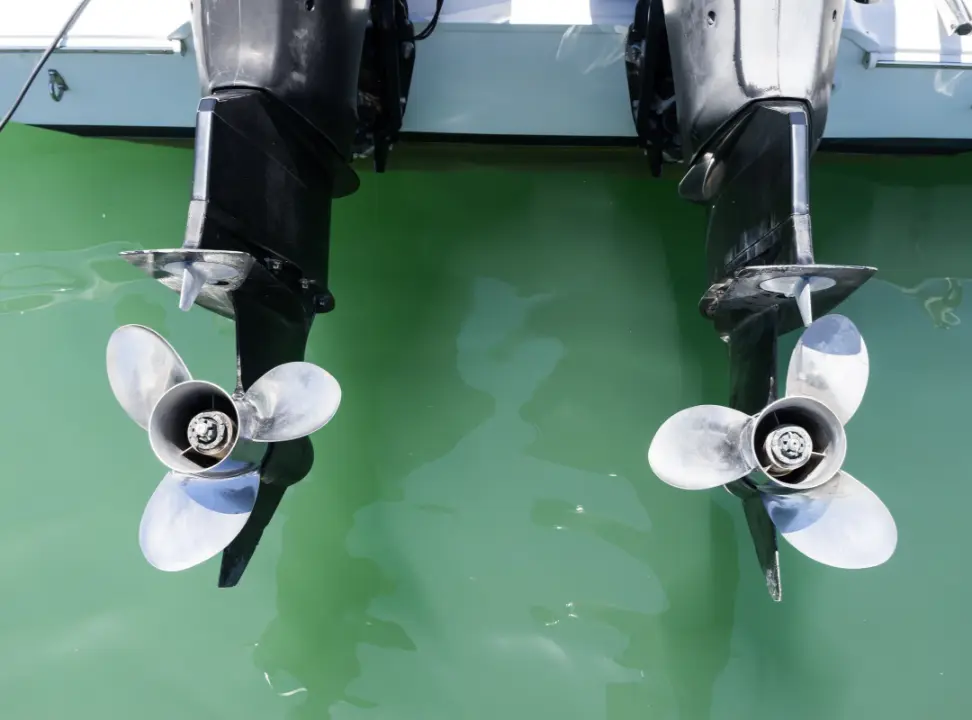
On boats, propeller materials also affect performance. Lighter or stronger materials reduce drag and improve thrust, allowing the engine’s power to translate more efficiently into forward motion.
The Simpler Design Behind the 2-Stroke Engine
A 2-stroke engine uses fewer moving parts. It does not rely on valves or complex timing systems. The piston, crankshaft, cylinder, and spark plug handle most of the work.
This simpler design reduces weight and improves speed. It also makes the engine easier to repair. However, this same design allows some unburnt fuel to escape with the exhaust gases. That leads to blue smoke and higher emissions, which become more noticeable depending on load and the types of propellers used with the engine.
How Many Strokes Are in a 4-Stroke Engine
A 4-stroke engine completes its combustion cycle in four separate strokes. The piston travels up and down twice. The crankshaft completes two revolutions to finish one cycle. Each stroke serves a single purpose. This structure improves control, efficiency, and long-term reliability, which aligns closely with the factors to consider when choosing boat propellers, such as load, speed range, and engine characteristics.
The 4-Strokes Explained in Order
The intake stroke begins the cycle. The piston moves down while the intake valve opens. Air and fuel enter the cylinder.
Next comes the compression stroke. The piston moves up. The valves close. The engine compresses the mixture tightly.
Then the combustion stroke occurs. The spark plug ignites the mixture. Combustion forces the piston down and creates power.
Finally, the exhaust stroke clears the cylinder. The piston moves up again. The exhaust valve opens. Exhaust gases exit through the exhaust system.
This sequence completes the combustion cycle.

Power Delivery in a 4-Stroke Engine
A 4-stroke engine produces power every other revolution. This spacing creates smooth and consistent power delivery. The engine feels stable across a range of speeds.
While it produces fewer power strokes than a 2-stroke engine, it maintains better torque control. This balance makes the engine reliable at lower rpm and during extended operating hours. That steady behavior explains why 4-stroke engines dominate modern boats and 4-stroke motorcycles. Propeller materials affect performance by influencing efficiency and thrust, which is why it must be considered.
Comparing Power at the Same Displacement
When engines share the same displacement and rpm, the difference becomes clear. A 2-stroke engine produces more power because it fires every revolution. A 4-stroke engine fires every other revolution.
The 2-stroke engine feels aggressive and fast. The 4-stroke engine feels controlled and predictable. One focuses on peak power. The other focuses on usable power over time, which often suits an inboard boat motor that runs for long periods under steady load.
Fuel Efficiency & Long-Run Performance
Fuel efficiency separates these engines in real-world use. A 4-stroke engine burns fuel more efficiently. It controls intake and exhaust with precision and wastes less fuel.
A 2-stroke engine loses some fuel during the exhaust process. This reduces efficiency and increases gas consumption. Over the long run, 4-stroke engines cost less to operate and perform better under steady workloads.
Oil Use, Wear, & Maintenance
A 2-stroke engine mixes oil with fuel. The oil lubricates engine components during combustion. This process creates blue smoke and higher emissions.
A 4-stroke engine stores oil separately. It circulates oil without burning it. This design protects engine components and reduces wear. That difference leads to longer engine life and fewer rebuilds in 4-stroke engines.
Weight, Speed, & Mechanical Complexity
2-stroke engines weigh less because they use fewer moving parts. The lighter build improves acceleration and speed.
4-stroke engines weigh more due to valves and timing components. This added complexity improves efficiency and durability. Each design serves a different purpose. Speed-focused setups favor 2-stroke engines. Long-term reliability favors 4-stroke engines.
Final Thoughts on Stroke Engines
So, how many strokes does each engine use? A 2-stroke engine completes its cycle in 2 strokes. A 4-stroke engine completes it in 4 strokes. That single difference shapes power, efficiency, emissions, and engine life. 2-stroke engines deliver more power and faster response. 4-stroke engines, on the contrary, provide fuel-efficient operation and consistent performance over time. Neither design is better in every situation. The right choice depends on how you value power, efficiency, and durability in your engine.
Prop Depot Mercury Props Matched to 2- or 4-Stroke Power
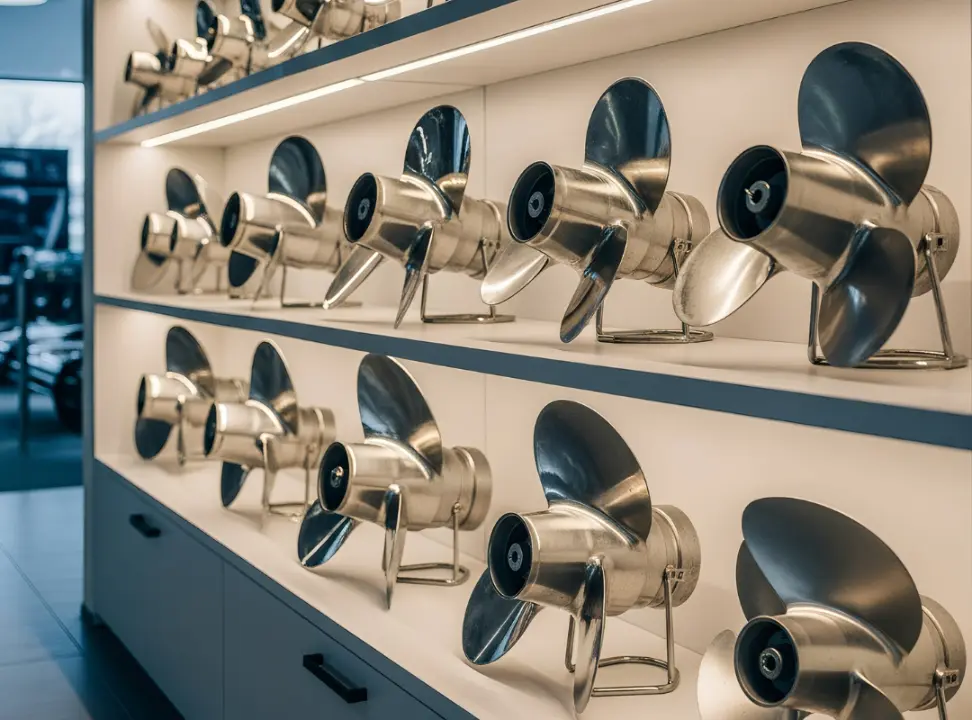
Understanding engine strokes often leads to one practical concern: does your prop match how your engine actually makes power? Prop Depot helps boat owners dial in performance with properly selected Mercury propellers and trusted prop repair services that improve power delivery. The right prop setup lets your engine perform the way it should. Shop Mercury props or contact us to get the right match.