 Google Shopping Exceptional Rating
How Does Changing Propeller Pitch Affect RPM and Speed?
Understanding the relationship between propeller pitch, engine RPM, and speed is the single most effective way to dial in your boat’s performance. Pick the wrong one, and you either stall out or redline the engine without going anywhere fast. But get it right, and you unlock better fuel economy, a faster hole shot, and a higher top speed. Here is a breakdown of how pitch mechanics work and how they determine your boat’s performance.
What Is a Propeller Pitch?
Pitch is the theoretical distance a propeller would move forward in one rotation through a soft solid, like wood.
For example, a 21-pitch prop theoretically moves forward 21 inches in one revolution. A 17-pitch prop moves 17 inches. It’s simple math. But, in water, factors like slip and drag come into play, so you never achieve 100% of that distance. However, pitch remains the primary factor that dictates your engine RPM and maximum speed.
Think of pitch as the gearing of your boat.
- Low Pitch: Like 1st gear in a car. Great for power and acceleration, but runs out of steam at high speed.
- High Pitch: Like 5th gear. Great for speed, but hard to get moving from a standstill.
Understand how to choose between lower and Higher propeller pitches.
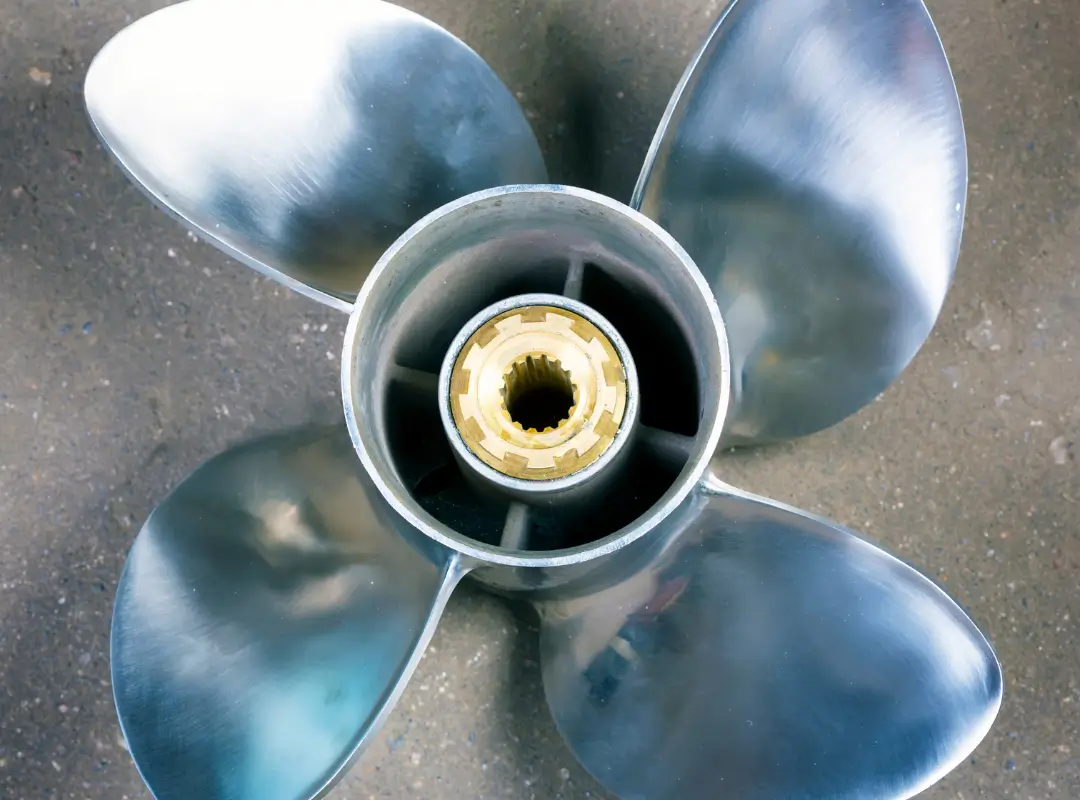
How Changing Propeller Pitch Affects RPM
When the pitch increases, the engine has to work harder to push the blades through the water. This added resistance slows the engine’s rotation speed.
Generally, changing the pitch by 1 inch changes engine speed by approximately 150-200 RPM.
- Increasing Pitch: If you switch from a 19-pitch to a 21-pitch prop (adding 2 inches), you can expect your RPM to drop by about 300-400 RPM at wide open throttle.
- Decreasing Pitch: If you drop from a 21-pitch to a 19-pitch, your RPM will likely increase by that same amount (300-400 RPM).
Why does this matter? Every motor has a specific recommended RPM range (usually 5000-6000 RPM for outboards). Operating outside this range can damage the engine or result in poor performance.
Propeller Diameter in Boat Performance
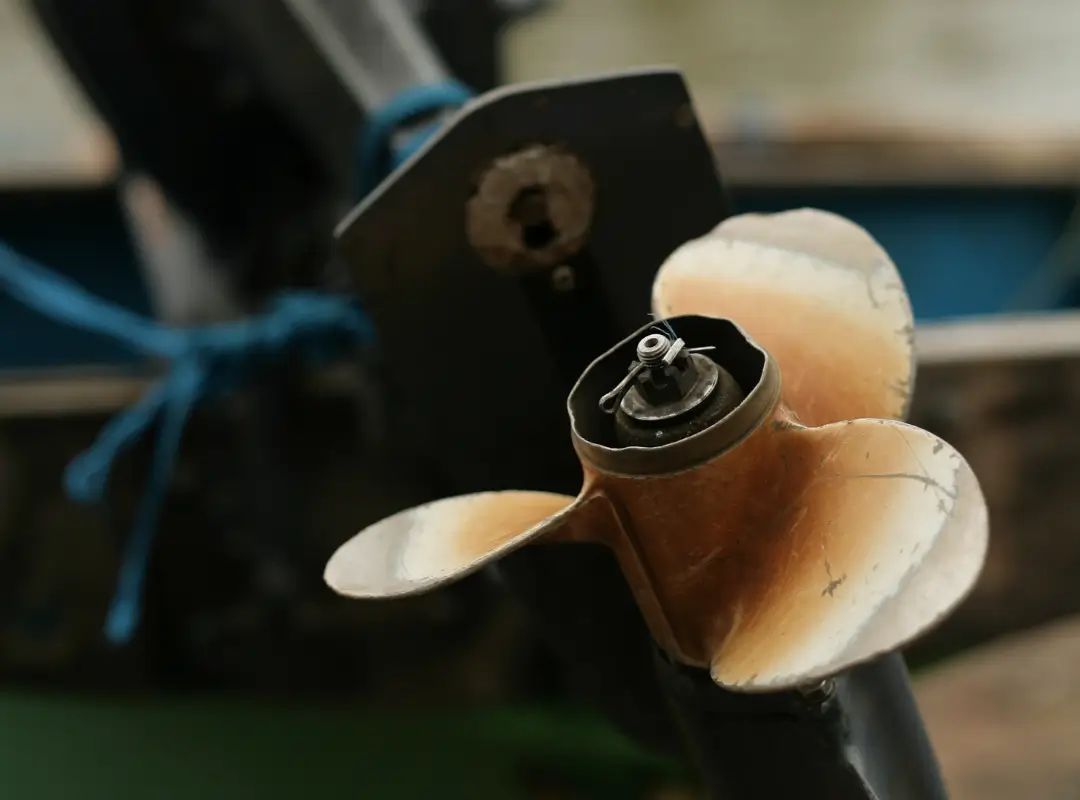
Propeller diameter is the distance across the circle made by the blade tips as the propeller rotates. Generally, the diameter and pitch of a propeller are inversely related. A high-speed prop usually has a smaller diameter, while a workhorse prop has a larger diameter.
A larger diameter prop pushes a larger volume of water. This creates more thrust and better grip. It is essential for:
- Heavier Loads: Pontoon boats and cruisers benefit from the extra push.
- Maneuverability: It provides better authority at dock speeds.
However, a bigger diameter prop also creates higher drag. Spinning a large blade surface requires more power. If you simply switch to a larger diameter without adjusting the pitch, your RPMs will drop significantly due to the added resistance.
How Prop Diameter & Pitch Work Together
We mentioned earlier that pitch is theoretical. In the real world, water is not solid. As the blades push against the water, some of it slides past. The difference between the theoretical distance and the actual distance traveled is called slip.
- High Slip: Often caused by a propeller blade that is too small (diameter) or worn out. It feels like the engine is revving, but the boat isn’t moving proportionally.
- Low Slip: Indicates a better grip. A new prop with a cup (a curved trailing edge) can reduce slip, effectively acting like a slightly higher pitch prop.
Frequently Asked Questions
How Does Propeller Pitch Affect Rpm?
Propeller pitch and RPM have an inverse relationship. Increasing the pitch increases the load on the engine, causing the RPM to drop (typically 150-200 RPM per inch of pitch). Conversely, decreasing the pitch reduces the load, allowing the engine to spin faster and increasing the RPM.
Does A Higher Pitch Prop Go Faster?
Yes, a higher pitch prop generally provides a higher top speed, provided the engine has enough power to reach its recommended RPM range. Because the prop travels a greater theoretical distance with each rotation, it pushes the boat faster at the top end, though acceleration will be slower.
What Does Changing The Pitch On A Prop Do?
Changing the pitch alters the trade-off between acceleration (hole shot) and top speed. Lowering the pitch improves acceleration and towing power but reduces top speed. Raising pitch improves top speed and cruising efficiency but reduces acceleration. It allows you to match the propeller’s load to the engine’s power curve.
What Happens If Your Prop Has Too Much Pitch?
If a prop has too much pitch, the engine will struggle to reach its optimal RPM range, a condition known as “lugging.” This results in poor acceleration, a sluggish hole shot, and reduced top speed because the engine cannot develop its full horsepower. It can also cause engine overheating and premature wear.
Conclusion
Changing your propeller pitch is the most effective way to tune your boat’s performance. If you pull skiers or carry heavier loads, lean toward a lower pitch and perhaps a larger diameter. If you just want to go fast on a light boat, aim for a higher pitch. Always test your setup to ensure you are hitting the right RPM range. A well-selected prop not only makes the boat more fun to drive but also protects your engine and saves you money at the gas pump.
Upgrade Your Propellers with Prop Depot in Tennessee!
Ready to get the most out of your boat? Prop Depot in Tennessee carries a full selection of high-performance outboard and sterndrive propellers, including Acme, OJ, Cruiser, POD Drive, and aluminum options. Whether you’re looking to improve hole shot, top speed, fuel efficiency, or handling, we have the right prop for every setup. Contact Us now!