
What propeller is best for heavy loads and towing?
Why Does Towing & Heavy Load Change Everything?
Adding weight increases resistance. Your engine has to push more water, lift the boat onto the plane, and keep speed stable while pulling another person behind you. Heavy load and towing affects:
- Hole shot (getting on the plane quickly)
- Midrange pull and throttle response
- How well the prop grips in rough water
- Your ability to hold comfortable cruising speeds
- Fuel burn and overall efficiency
A prop that’s great for top-end speed might struggle badly when the boat is loaded or towing skiers. That’s why propeller selection matters so much for towing performance.
What Prop Pitch Works Best for Heavy Loads & Towing?
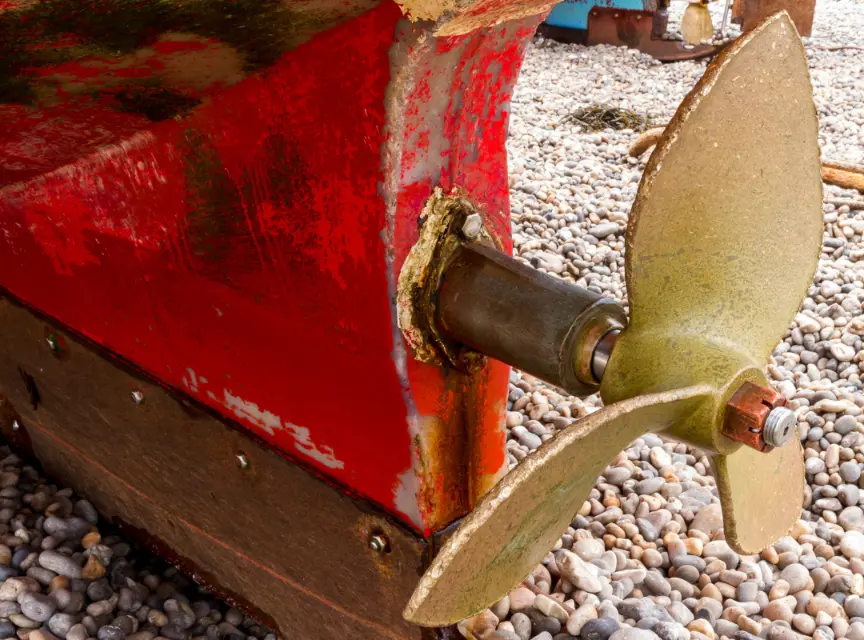
For towing, the best prop pitch is usually a lower pitch than what you’d run for speed.
Why Lower Pitch Helps
A lower-pitch propeller allows the engine to spin up faster and reach the RPM range where it produces more usable torque. This results in better acceleration, stronger pulling power, quicker planning with a typical load, and less “bogging” when the skier pulls hard. This makes lower-pitch props ideal for activities like towing skiers, tubing, wakeboarding, slalom skiing, or powering pontoon boats with a full crew.
The Pitch Trade-Off
A lower pitch generally means lower top speed and higher RPM at a given cruise speed. But for towing, that’s usually a good trade because you’re prioritizing strong acceleration and control over top-end speed.
How Many Blades Are Best for Towing? (3-Blade vs 4-Blade)
Blade count is one of the biggest factors in towing performance.
3-Blade Props
A 3-blade prop is often faster at the top end and slightly more efficient at high speeds because it produces less drag. However, under heavy loads, it may slip more during takeoff, struggle to maintain grip in rough water, and feel weaker when pulling someone out of the water.
4-Blade Props
A 4-blade prop typically provides better grip, more thrust at lower speeds, improved handling, smoother operation when the boat is loaded, and a greater ability to stay on plane at slower speeds. For towing, more blades often equals more control and less slip, especially when the boat is heavy. So if you’re asking “best prop for heavy boats and towing,” a 4-blade is a very common answer.
Does Propeller Diameter Matter for Heavy Loads?
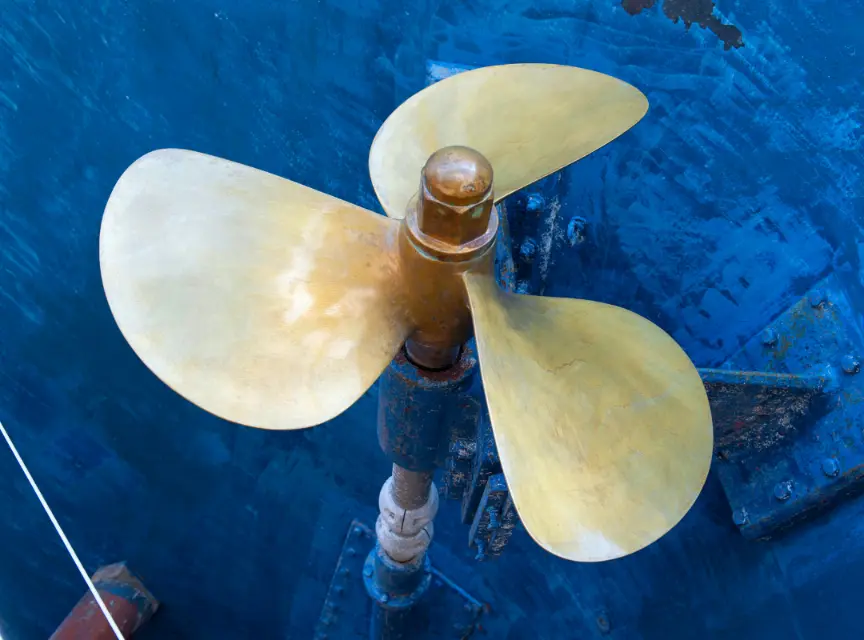
Yes. Boat propeller diameter plays a major role in how much water the prop can push. A larger diameter prop generally offers more blade area, displaces more water per revolution, and delivers stronger low-speed thrust.
This can improve load carrying, towing, and stability during acceleration. However, the diameter must match your engine and gear ratio. A too-large diameter can overload the motor and drop the RPM too far. A prop shop can help you choose the correct prop diameter and pitch combination for optimal performance.
Stainless Steel vs Aluminum Propellers for Towing
Both materials can work well, but they behave differently.
Aluminum Propellers
Aluminum props are cost-effective, ideal for recreational boats, and easier on the wallet if you hit something. However, aluminum flexes more under load, which can reduce bite when towing or pushing heavy loads.
Stainless Steel Propellers
Stainless steel propellers are stronger and more durable, more resistant to flex, and better at maintaining their blade shape under pressure. This usually translates to better acceleration, improved grip, enhanced handling, and more consistent performance. For towing, stainless steel often delivers superior results because it transfers engine power more efficiently into the water.
What About Cupped Propellers for Heavy Loads?
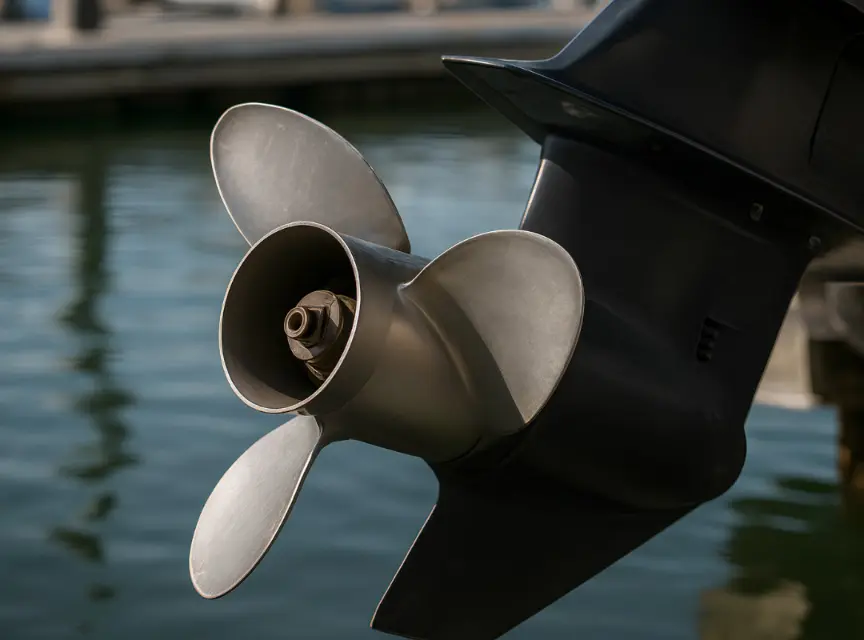
A cupped propeller has a slight curl at the trailing edge of the blades. That “cup” helps the prop hold water better, reducing ventilation and slip. Cupping can help with:
- stronger bite during the hole shot
- improved handling in rough water
- keeping the prop hooked up during turns
Many towing-focused props include cups because towing puts extra stress on the propeller blades, especially when the rider pulls hard.
Why WOT RPM Matters
Your engine has a recommended WOT RPM range. That’s the wide-open-throttle operating window the motor is designed to run safely in. When selecting the best prop for towing, you want your engine to reach its WOT RPM with a normal load. If the prop has too much pitch, the engine may lug because WOT RPM drops too low. Conversely, if the pitch is too low, WOT RPM can go too high, risking over-revving. Either situation can hurt a vessel’s performance and long-term engine health. A towing prop should let the engine work comfortably in its operating range, especially when the boat is loaded.
What About Cupped Propellers for Heavy Loads?
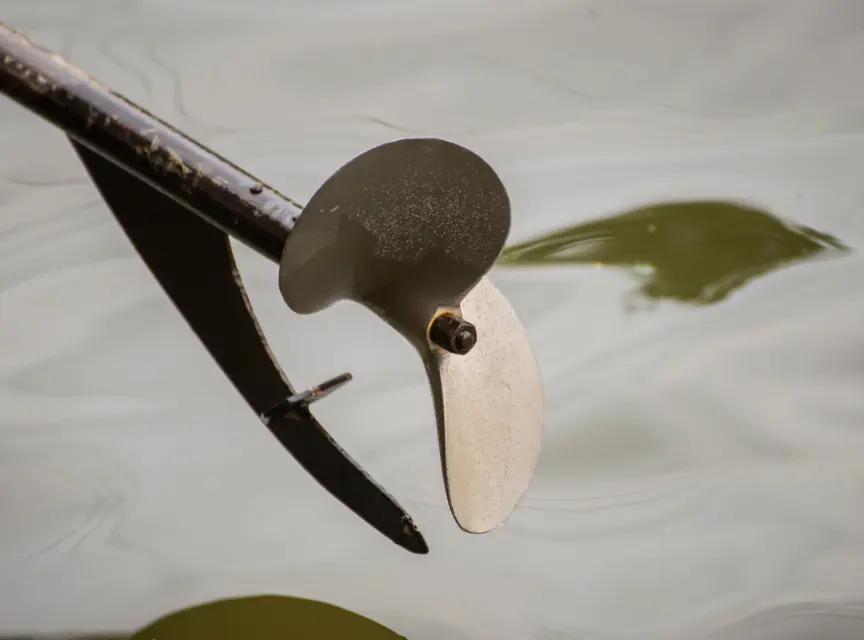
A cupped propeller has a slight curl at the trailing edge of the blades. That “cup” helps the prop hold water better, reducing ventilation and slip. Cupping can help with:
- stronger bite during the hole shot
- improved handling in rough water
- keeping the prop hooked up during turns
Many towing-focused props include cups because towing puts extra stress on the propeller blades, especially when the rider pulls hard.
Why WOT RPM Matters
Your engine has a recommended WOT RPM range. That’s the wide-open-throttle operating window the motor is designed to run safely in. When selecting the best prop for towing, you want your engine to reach its WOT RPM with a normal load. If the prop has too much pitch, the engine may lug because WOT RPM drops too low. Conversely, if the pitch is too low, WOT RPM can go too high, risking over-revving. Either situation can hurt a vessel’s performance and long-term engine health. A towing prop should let the engine work comfortably in its operating range, especially when the boat is loaded.
Best Propeller Setup for Common Heavy Load Boats
Here are practical examples of what tends to work well.
Pontoon Boats
Pontoons often carry heavy loads and operate at lower speeds, so many perform best with a lower pitch, larger diameter, and more blades for increased thrust. A 4-blade prop can be an excellent choice for pulling tubes or maintaining a stable cruise.
Fishing Boats With Lots of Gear
Fishing boats carrying full tackle, livewells, and passengers benefit from a strong hole shot, better grip, and improved handling. Using a lower pitch along with a prop designed for lift and bite often enhances overall performance.
Recreational Boats Towing Skiers
For towing skiers and wakeboarders, low-end pull is more important than top-end speed, and consistent acceleration helps the rider get up more easily. A 4-blade stainless prop is often the ideal choice in these situations.
Will You Lose Top Speed With a Towing Prop?
A prop optimized for towing will often sacrifice top-end speed and maximum MPH, trading some speed for increased pulling power and control. The payoff is better acceleration, more consistent performance, improved handling, and less struggle when the boat is loaded. For most boaters focused on towing, this trade-off is well worth it.
Conclusion: The Best Propeller for Heavy Loads & Towing
If you want the most accurate answer, it’s this: The best propeller for heavy loads and towing is the one that gives strong acceleration, keeps your engine within WOT RPM range, and provides reliable grip with minimal slip.
For many boats, the ideal towing setup often includes a lower pitch, a 4-blade design, stainless steel construction, a slightly larger boat size, and sometimes a cupped blade for extra bite. This combination typically delivers the best balance of towing power, handling, and real-world performance.
Frequently Asked Questions
Below, we’ve addressed some of the frequently asked questions about the best propellers for heavy loading and towing.
1) What prop pitch is best for towing skiers and heavy loads?
2) Are stainless steel propellers better than aluminum propellers for towing?
3) Can Prop Depot help me choose the right propeller for heavy loads?
Yes. Prop Depot can help match your prop pitch, diameter, and blade count to your boat and towing needs, so you get better acceleration without guessing.
4) What prop works best for towing on Tennessee lakes with weekend boat traffic?
5) Will a towing prop reduce my top speed?
Shop the Best Props Nationwide with Prop Depot
Choosing the right propeller for heavy loads and towing doesn’t have to be guesswork. Prop Depot, based in Knoxville, Tennessee, helps boaters nationwide find the right prop by matching pitch, diameter, blade count, and material to your boat, engine, and towing needs. We have the best boat prop in the USA, offering a massive selection of top brands like Mercury, SOLAS, ACME, and more.
No matter if you’re pulling skiers, hauling a full crew, or upgrading for better low-end power, their team offers quality aluminum propellers and expert guidance you can trust. Call 865-673-8171 to speak with a prop specialist today!