 Google Shopping Exceptional Rating

A boat moves across the water through a system called marine propulsion, and one of the most important parts of that system is the boat propeller. Understanding how a propeller works helps you choose the right prop configuration and troubleshoot performance issues. While propellers may look simple, their function relies on mechanical engineering, fluid dynamics, and precise geometry. At its core, a boat propeller converts rotational power from the engine into forward motion. But how do boat propellers accomplish this? To answer that, we need to examine the propeller blades’ positioning, shape, and movement. So let’s learn.
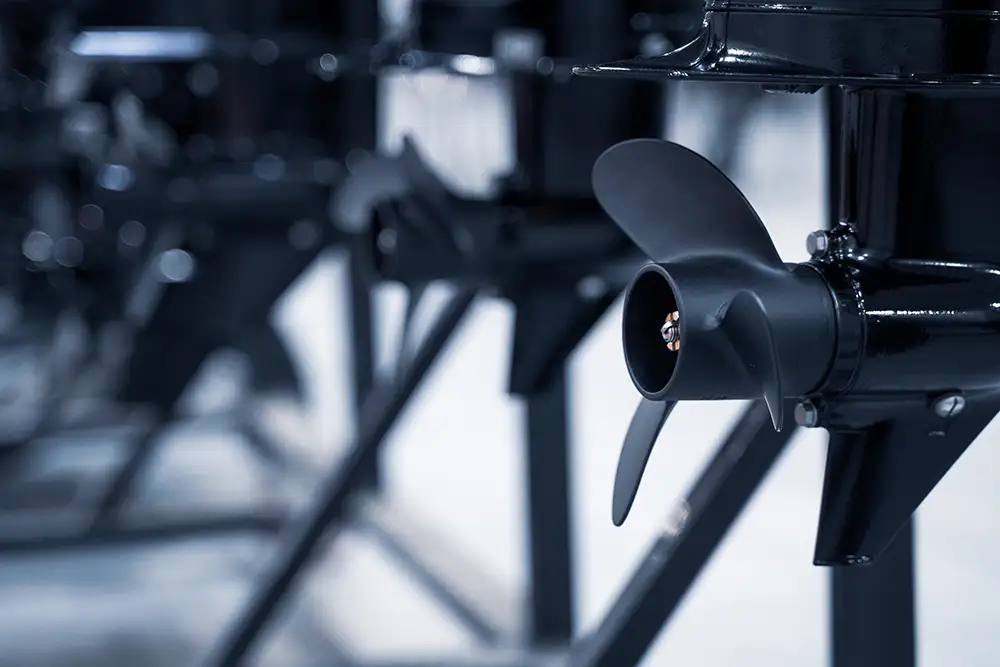
The Basic Principle Behind How Propellers Work
To understand how propellers generate thrust, imagine how old paddle wheels pushed water backward to move a ship forward. A boat propeller operates on a similar idea but in a far more controlled and efficient manner.
As the spinning propeller rotates, each propeller blade pushes water backward, and the reaction from the water pushes the boat forward. This interaction is guided by the blade angle and the pitch angle of the blades.
When the propeller spins, the blade shape creates a pressure difference in the water: higher pressure on the rear-facing side and lower pressure on the forward-facing side, moving the boat forward.
Thinking that this may also be linked to the air? Yes, this same concept also appears in aviation. An airplane propeller and aircraft propellers produce thrust by creating a pressure difference in the air, similar to how airplane wings generate lift.

How Blade Geometry Affects Performance
The design and shape of a propeller fall under the term propeller design. Each piece of the prop is designed to interact with water in a specific way.
- Propeller blades have curved surfaces that create lift (similar to wing shapes).
- Blade tips cut through water with reduced drag.
- The blade pitch and pitch angle determine how much water the blade “screws” backward.
A steep pitch angle moves more water per rotation but needs more power. A shallow pitch angle moves less water per rotation but is easier for the engine to turn. This is why choosing the right propeller for your watercraft involves balancing power, speed, and handling.
Types of Marine Propeller Configurations
Different boats need different styles of marine propellers, depending on load, use, and power requirements. There are several categories of propeller types based on how the pitch is adjusted.
Fixed Pitch Propellers
These types of propellers have blades set to one blade pitch that cannot be changed. The pitch is built directly into the metal structure, and these props are durable and widely used on small commercial vessels and recreational boats. While they cannot adjust on the fly, they offer reliable performance assuming the correct pitch is selected.
Variable Pitch Propellers
These propellers allow adjustment of the pitch angle while your boat is out of the water. The blade shape remains the same, but the pitch can be altered between uses to suit different performance needs. This is especially helpful for boats that experience changing loads or operating conditions.
Controllable Pitch Propeller
A controllable pitch propeller goes one step further. Unlike an adjustable or fixed-pitch propeller, a controllable-pitch propeller changes pitch while the boat is operating. This enables improved engine performance across different speeds and power demands. Some advanced vessels and larger ships use these systems.
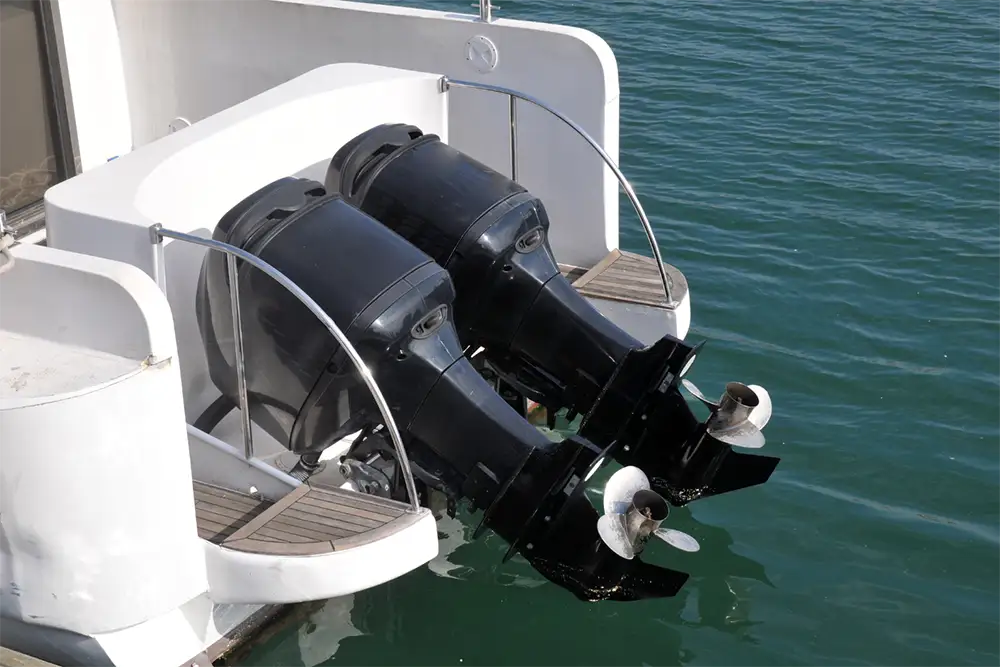
Specialty Propeller Designs
Not all boat propellers look alike. Some are specialized to increase performance and control under certain conditions.
Ducted Propeller
A ducted propeller uses a circular housing, or shroud, around the blades, improving efficiency at lower speeds and protecting the propeller. It is commonly seen in thrusters, tugboats, and maneuvering systems.
The Role of the Propeller Shaft
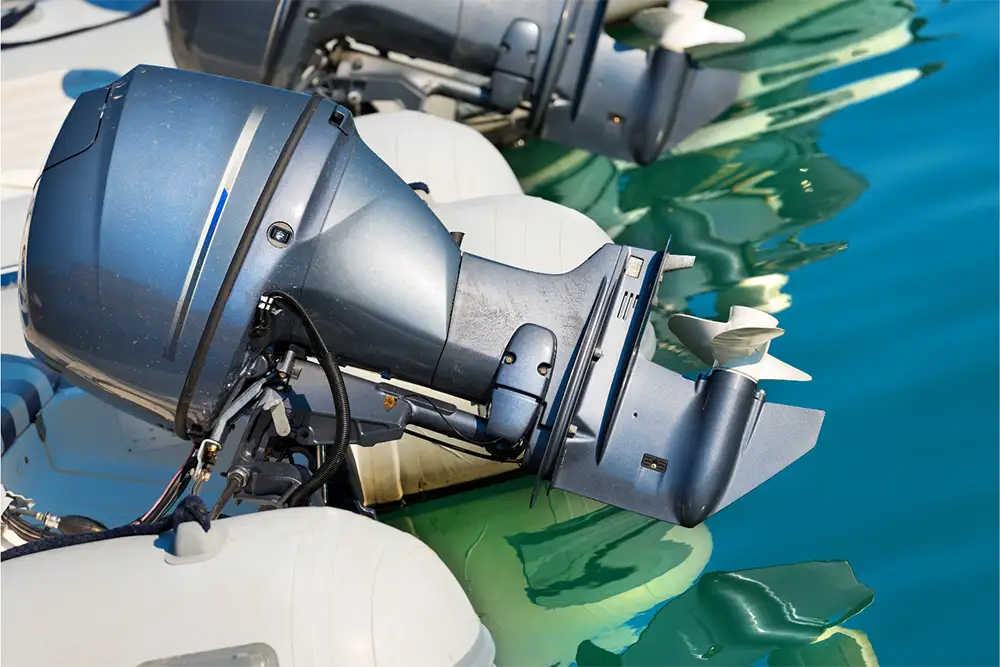
The propeller shaft connects the motor or engine to the propeller. As the shaft rotates, it transfers rotational power to the propeller. Alignment of the propeller shaft affects noise, vibration, and performance. When misaligned, the propeller can lose thrust and increase fuel use.
How a Spinning Propeller Sets Water in Motion
When the propeller spins, its angled blades create a spiraling flow of water behind the boat. This flow is sometimes referred to as a stream or wake. The faster the propeller rotates, the faster water is pushed, and the faster your boat moves ahead.
The water does not simply move straight backward. It rotates in a corkscrew pattern, and the twisting motion is part of how thrust is transferred into forward motion.
Comparing Boat & Aircraft Propellers
While air and water differ in density, the core concept is nearly the same. Airplane forward motion depends on air pressure differences generated by the turning blades. Marine propulsion relies on similar forces but applied through water.
- Airplane wings move through the air.
- Marine propeller blades move through water.
- Both rely on pressure difference to create motion.
So, in short, the physics in both cases remain consistent even though the medium changes.
Conclusion
Understanding how a propeller works comes down to how the propeller blades interact with water. By adjusting pitch angle, blade pitch, and propeller design, different boats can get different performance characteristics. From controllable pitch propellers to fixed pitch propellers, from ducted propeller designs to aviation-style constant speed propellers, the prop remains one of the most important components in converting power into forward motion. The science behind how propellers generate thrust shows just how essential this mechanical design is to watercraft motion.
Call PROP DEPOT for Boat Propeller Purchase & Repair
If you’re still asking yourself how a propeller works, Prop Depot can help you find the answer. We are a Tennessee-based propeller company and an authorized dealer for OJ, Mercury, ACME, Powertech, and Solas. Our inventory covers everything from new propellers to outboard, sterndrive, pod drive, cruiser, and aluminum props. You’ll find brands like OJ Propellers, Solas, Powertech Propellers, Acme, Mercury, Volvo Penta, Michigan Wheel Cruiser Propellers, and Quicksilver Propellers. And if you need repairs, we offer Acme prop repair, OJ prop repair, Volvo IPS/pod drive repair, Solas Bravo III prop repair, cruiser prop repair, and more.
Call us today to get the right prop for your boat.