 Google Shopping Exceptional Rating
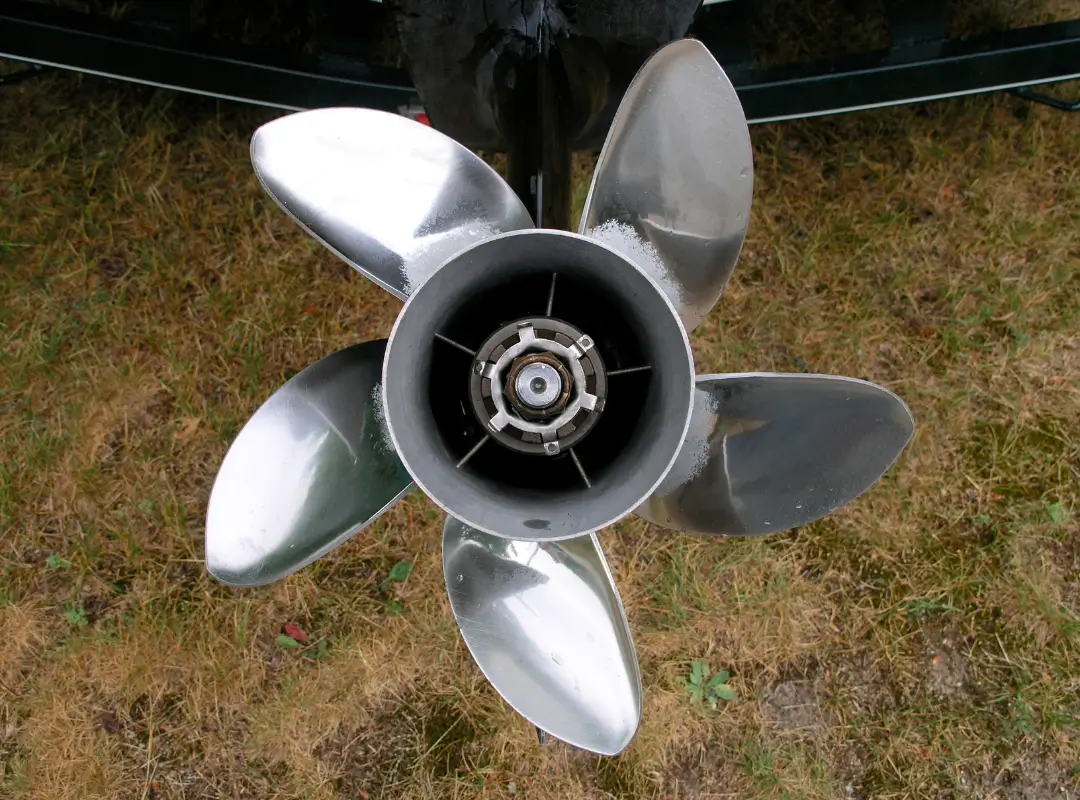
You suspect you have the wrong propeller on your boat, but when you pull it out of the water, the numbers on the hub are worn or unreadable. Now what? You are left guessing unless you know how to measure a boat prop yourself.
If you get the diameter or pitch wrong, you risk damaging your engine or burning excessive fuel. Here is a complete guide to determining the specs of your current prop so you can find a suitable replacement or optimize your boat’s performance.

How to Measure Prop Diameter
Measuring the diameter is straightforward, but the method changes slightly depending on how many blades you have.
For a 2-blade or 4-blade propeller
It is simple geometry. You just measure the distance from the tip of one blade to the tip of the blade directly opposite it. That straight line across the center of the hub is your diameter.
For a 3-blade propeller
This is where people get confused because there is no blade directly opposite another. If you just measure from one tip to the hub center and double it, you might be off due to measurement error or an oddly shaped hub.
Here is the most accurate method:
- Measure the distance from the center of the propeller shaft (the hole in the middle) to the tip of one blade. This is your radius.
- Multiply that number by two.
- If the distance from the center to the tip is 7.25 inches, then 7.25 x 2 = 14.5 inches. So, you have a 14.5-inch diameter prop.
Learn more: Understand how a propeller works?
How to Measure Prop Pitch
Professional prop shops use pitch blocks or digital scanning tools to measure the blade’s curvature. However, you can make a rough calculation using a pitch gauge or by doing some math based on the angle and radius.
Ideally, you want to find the stamped numbers. Check the hub, the barrel, or sometimes under the prop nut washer. You might see a number like “14.5 x 19”. The first number is the diameter (14.5), and the second is the pitch (19).
If the numbers are gone, you can try this DIY method:
- Place the prop on a flat surface (hub down).
- Pick a point on a blade at a specific radius (e.g., 4 inches from the center).
- Measure the height from the table to the leading edge and the trailing edge of the blade at that radius.
- Use the difference in height and the angle between those points to calculate the slope.
Honestly? If the numbers are gone, the best route is to take it to a pro. Home measurements for pitch can be inaccurate due to blade variations or progressive pitch (where the pitch changes across the blade face).
Explore more: Understand the difference between high and low propeller pitch.

How Pitch Affects Boat Performance
Why does this matter? Pitch determines your engine’s operating range.
- Low Pitch Prop: Think of this like first gear in a car. A lower pitch (e.g., 17 inches) provides incredible acceleration and thrust. It is great for pulling skiers or pushing a heavy boat. However, your engine will reach WOT (Wide Open Throttle) RPM quickly, and your top speed will be lower.
- High Pitch Prop: This is like fifth gear. A higher pitch (e.g., 23 inches) takes a bigger bite of water. It is harder for the engine to turn, meaning slower acceleration (hole shot), but it offers a higher potential top speed.
The Golden Rule: Changing pitch by 1 inch usually changes engine speed by about 150-200 RPM.
Blade Angle, Rake, and Cupping
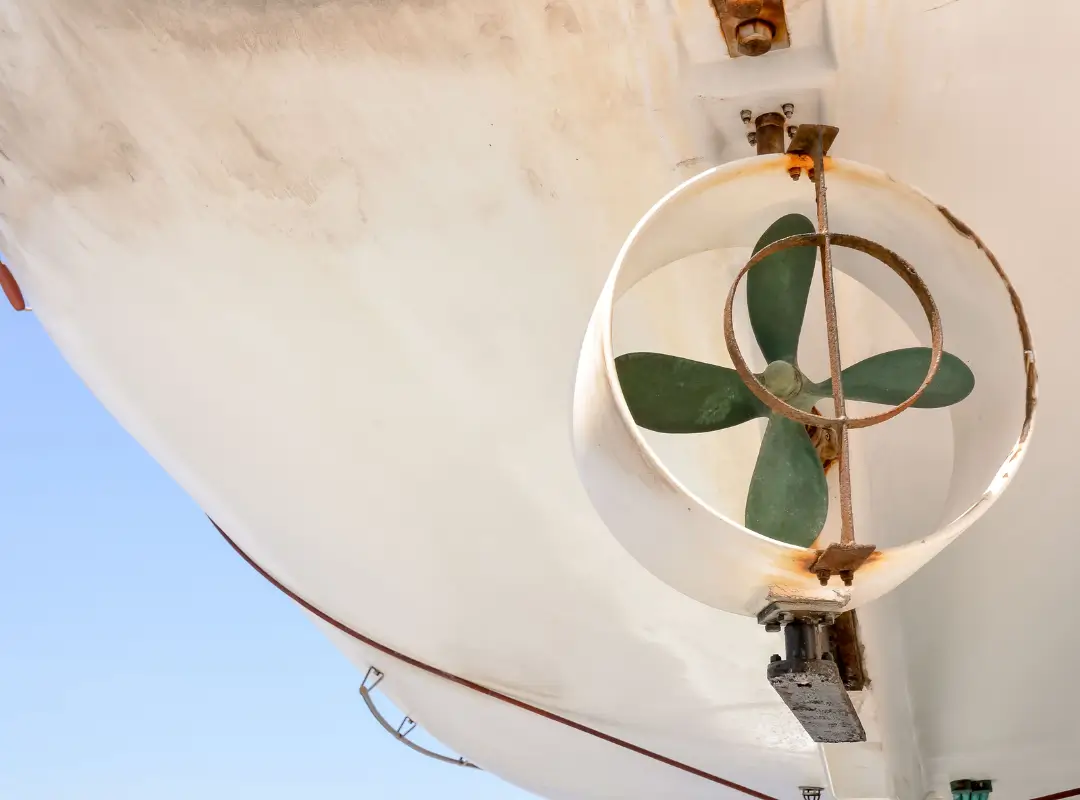
It is not just about diameter and pitch. The blade angle (rake) and cup also play huge roles.
- Rake: This is the angle at which the blades tilt away from the hub. A higher rake angle helps lift the bow of the boat, reducing hull drag and increasing speed.
- Cup: A small curved lip on the trailing edge of the blade. Cupping acts like adding pitch, giving the prop a better grip on the water. It reduces ventilation and allows you to run the engine higher on the transom.
Frequently Asked Questions
How Is Propeller Size Measured?
Propeller size is measured by two main numbers: diameter and pitch. The diameter is twice the distance from the hub center to the blade tip. The pitch is the theoretical distance the prop moves forward in one revolution. These numbers are usually stamped on the hub or barrel.
How To Measure A 3-Blade Propeller?
To measure the diameter of a 3-blade prop, measure the distance from the center of the propeller shaft hole to the tip of one blade. Multiply this measurement by two to get the total diameter. Measuring across from tip to tip doesn’t work on odd-numbered blades.
What Does An 8×6 Propeller Mean?
An 8×6 propeller has a diameter of 8 inches and a pitch of 6 inches. This means the propeller creates an 8-inch circle as it rotates and, theoretically, moves forward 6 inches for every full rotation of the shaft. It is typically a small prop for a small outboard.
How Are Props Sized?
Props are sized primarily by Diameter x Pitch (e.g., 14 x 21). The first number is the diameter in inches, and the second is the pitch. Sizing also involves the number of blades, rotation (left- or right-hand), and the material used (aluminum or stainless steel).
What Does 10×4 5 Prop Mean?
This likely refers to a 10 x 4.5 prop. It means the propeller has a 10-inch diameter and a 4.5-inch pitch. It is a very low-pitch prop, likely used for high-thrust applications like a kicker motor or a small sailboat engine that needs pushing power rather than speed.
Conclusion
Knowing how to measure and understand your boat prop gives you the power to fine-tune your ride. You don’t have to settle for sluggish acceleration or poor fuel economy. Whether you need a low-pitch prop for towing tubes or a high-pitch stainless wheel for speed runs, the math is the same. Check the numbers, test your RPMs, and adjust accordingly. Better maintenance = Good performance.
Boost Your Boat’s Performance with the Right Propeller
When it comes to maximizing your boat’s efficiency, handling, and speed, nothing beats having the right propeller under your hull. At Prop Depot, we carry a full lineup to match every boating style and need. Mercury Propellers deliver top-tier performance for serious anglers and weekend warriors alike. ACME Propellers are built to give your boat that perfect hole shot and steady cruising power. If affordability without compromising quality is your goal, our Aluminum Propellers offer a reliable and cost-effective choice for a wide range of vessels. Contact Us Now!