 Google Shopping Exceptional Rating
The correct propeller is the single most important factor affecting your boat’s performance. This influences everything from hole shot and top-end speed to fuel efficiency and even engine longevity. Picking the wrong one can lead to sluggish performance, poor fuel economy, or even serious engine damage.
It’s about more than just the prop; it’s about matching the propeller to your specific boat, engine, and how you use it. So, how do you navigate the world of pitch, diameter, and blade count to find the perfect match?
Your WOT RPM Range
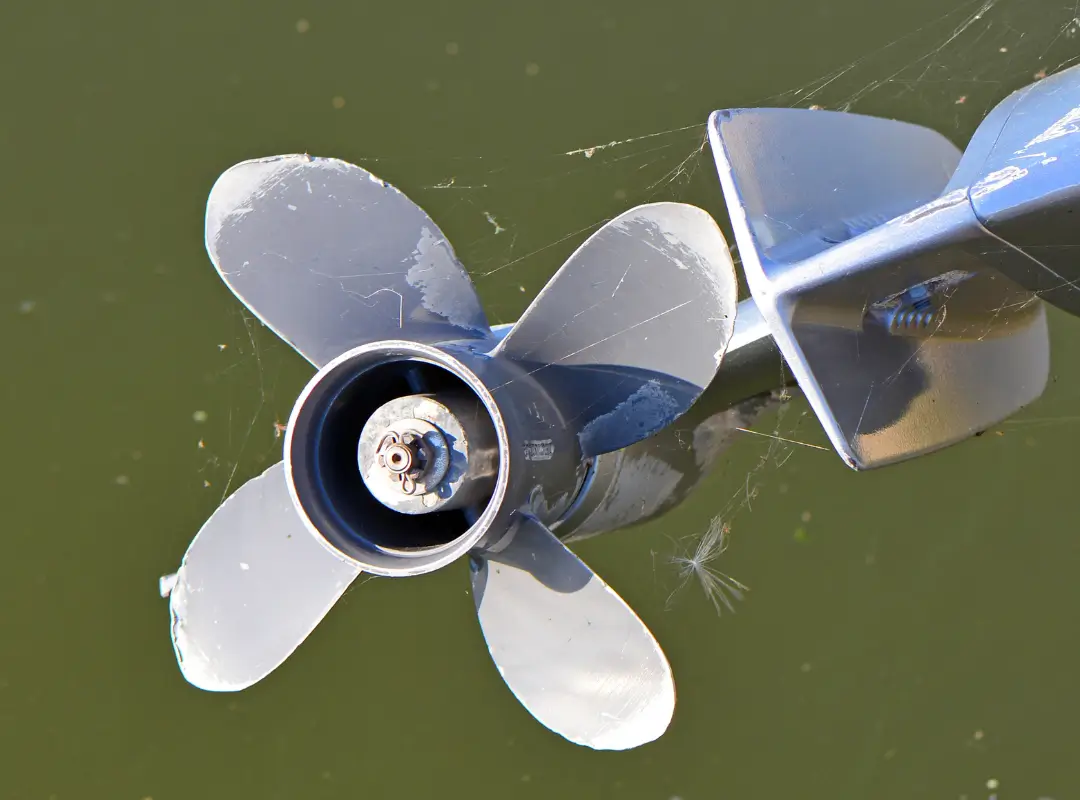
Before you even think about buying a replacement prop, you need one critical piece of information: your engine’s Wide Open Throttle (WOT) RPM range.
For example, a 150hp outboard might have a WOT range of 5000-5800 RPM. Your goal is to pick a boat propeller that allows your engine to run within this range at full throttle with a normal load.
- If your RPM is too low, you have too much pitch. This is like trying to start your car in third gear. The engine is “lugging,” which puts a significant strain on internal components and can cause damage.
- If your RPM is too high: You have too little pitch, causing the engine to over-rev. This is like driving on the highway in first gear. You are burning excess fuel and putting unnecessary wear on your engine.
Explore More: Understand how a propeller works?
Propeller Pitch
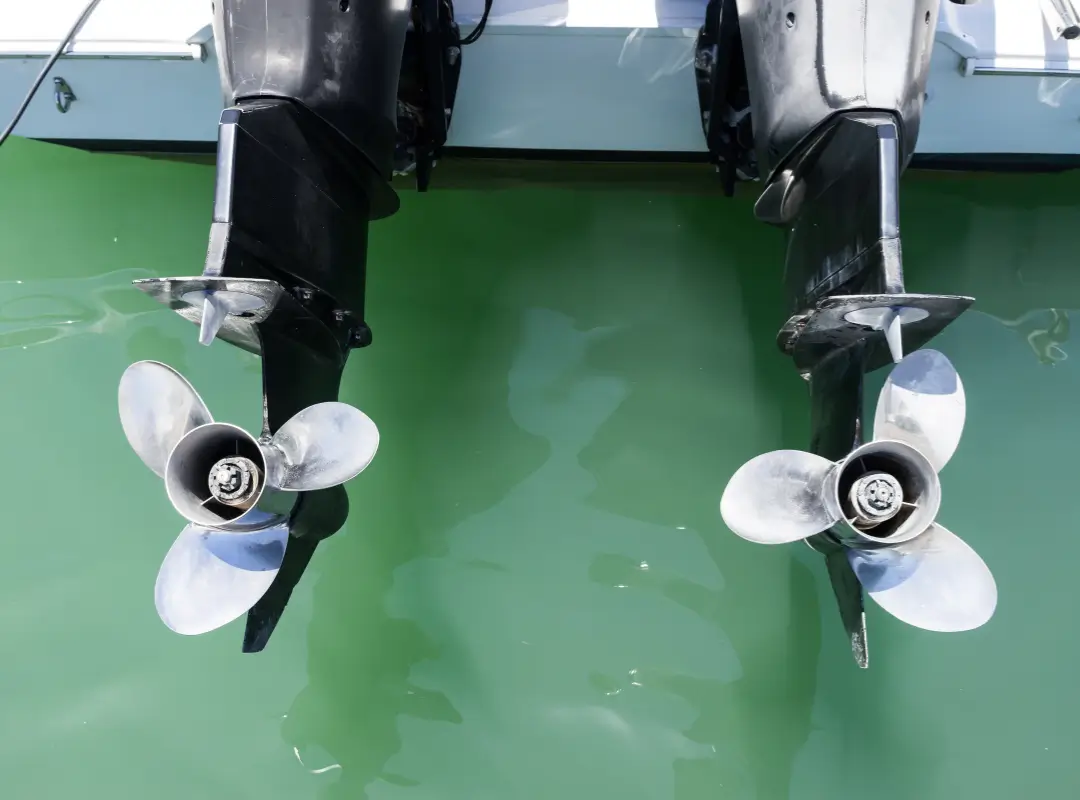
It’s defined as the theoretical forward distance, in inches, that a prop would move the boat in one full rotation. If you have a 21-pitch prop, it would theoretically move your boat forward 21 inches with every turn.
Think of prop pitch as the gearing for your boat.
- A lower pitch (e.g., 17″) is like a low gear. It provides excellent acceleration (a better hole shot) and is great for watersports or heavy boats. But your top-end planning speed will be lower.
- A higher pitch (e.g., 21″) is like a high gear. It offers a higher potential top speed but slower acceleration. It’s for lighter, fast, high-performing boats.
The Rule of Thumb: A 1-inch change in pitch will change your WOT RPM by about 150-200. If your current prop lets you rev to 6000 RPM (200 RPM over the limit), increasing pitch by one inch (e.g., from 19 to 20) should bring you down into the sweet spot.
Propeller Size & Diameter
A prop’s diameter is two times the distance from the center of the hub to the tip of any propeller blade. It’s the first number you see in a propeller size designation (e.g., 14.5 x 19). While important, diameter is usually chosen by engineers to match a specific pitch and engine type.
In general, smaller prop diameters generally offer higher RPMs and are found on faster boats, while larger diameters provide more thrust for pushing heavy loads. For most recreational boats, you won’t be changing diameter much; you’ll be focused on pitch. Here’s a complete guide to help you understand how to size a boat propeller.
3 Blades vs. 4 Blades
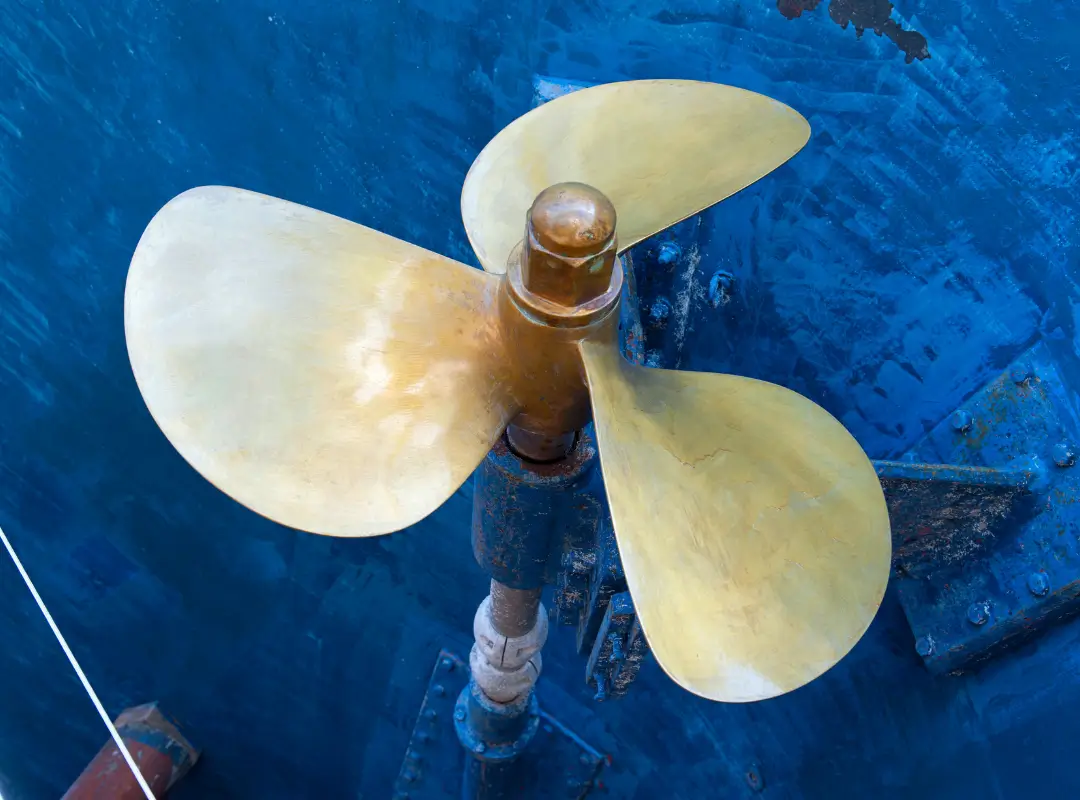
One of the biggest debates in prop talk is whether to run 3 or 4 blades.
3-Blade Props
This is the most common configuration. 3-blade props fill the needs of most boaters by offering good all-around performance. They generally provide a higher top-end speed than a 4-blade prop of identical pitch.
4-Blade Props
A 4-blade prop has more prop blades’ surface area in the water. This provides a better grip, which translates to a superior hole shot, better handling at low speeds, and the ability to stay on plane at a lower RPM. The trade-off is often a 1-2 mph loss in top speed. They are great for watersports boats or vessels that struggle to plane.
Aluminum vs. Stainless Steel
Aluminum Props
These are the standards for most boats. They are inexpensive and, if you have a prop strike, the soft metal will sacrifice itself, often saving you from costly lower-unit repairs. However, the blades flex under load, which reduces efficiency.
Stainless Steel Props
The performance upgrade is real. Stainless steel is much stronger, so the blades can be made thinner and more complex. Stainless steel props don’t flex, which improves acceleration, handling, and top speed. Stainless props can also feature more aggressive rake and cup designs. The downside? They are 3-4 times more expensive, and a significant prop strike can transfer damaging force to your prop shaft or gears.
Explore more: Complete guide to choose the best boat propeller.

Other Key Propeller Design Elements
Beyond the basics, a few other design features make a big difference.
Rake
This is the angle at which the blades slant forward or aft from the prop body. Rake doesn’t have a standard unit of measurement. Aft rake helps lift the bow of the boat, reducing the hull’s wetted surface area and increasing speed.
Cup
A small curl on the trailing edge of the prop’s blades. A cupped prop grips the water better, reducing ventilation (when the prop sucks air) and slip. This allows you to mount the engine higher for more speed and efficiency.
Frequently Asked Questions
Is A 19- Or 21-Pitch Prop Faster?
A 21-pitch prop has the potential to be faster. A higher pitch moves the boat a greater distance with each rotation. However, this is only true if the engine has enough horsepower to turn the 21-pitch prop efficiently within its recommended WOT RPM range.
How To Pick a Propeller Pitch?
Determine your engine’s WOT RPM range from the owner’s manual. Test your current prop to see where your RPMs land at full throttle. If you are within the range, you have the right prop pitch. If you are over, you need more pitch. If you are under, you need less pitch.
What’s Better, A 3 Or 4-Blade Prop?
It depends on your goals. A 3-blade prop is typically faster at top speed and offers good all-around performance. A 4-blade prop provides a superior hole shot, better grip in turns, and can stay on plane at lower speeds, making it great for watersports and heavy boats.
How Fast Is 3000 Rpm On A Boat?
There is no standard speed for 3000 RPM. Boat speed at a given RPM depends on the engine, propeller pitch, hull design, load, and water conditions. For one boat, 3000 RPM could be a slow trolling speed, while for another, it could be a comfortable cruising speed of 25 mph.
What Pitch Prop Is Best For Speed?
The highest pitch your engine can turn while staying within its recommended WOT RPM range will be the best for top speed. This requires a powerful engine and a relatively light boat. Simply adding a high-pitch prop to an underpowered boat will result in poor performance and engine lugging.
Final Thoughts
Picking the right propeller is a balancing act. A quality prop from a reputable brand will always outperform a cheap knock-off. Start by testing your current prop. If the performance is good and you are in the RPM sweet spot, get a replacement prop of the same size. If not, use the “1 inch of pitch = 200 RPM” rule to make a change.
Boost Your Boat’s Performance with the Right Propeller
When it comes to maximizing your boat’s efficiency, handling, and speed, nothing beats having the right propeller under your hull. At Prop Depot, we carry a full lineup to match every boating style and need. Mercury Propellers deliver top-tier performance for serious anglers and weekend warriors alike. ACME Propellers are built to give your boat that perfect hole shot and steady cruising power. If affordability without compromising quality is your goal, our Aluminum Propellers offer a reliable and cost-effective choice for a wide range of vessels. Contact Us Now!