
What Propeller Configuration Is Best for Shallow Water Operations?
If your boat’s propeller isn’t set up for shallow water, you risk expensive repairs and poor performance. So, what exactly makes a prop good for shallow water? Is it the material, the number of blades, or the pitch? The answer is a mix of all these factors. By the end of this guide, you will understand exactly how to configure your rig for best performance in the shallows.
Why the Right Propeller Matters in Shallow Water
When you are running in shallow water, your margin for error is almost zero. You need a prop that can bite the water instantly to get you on a plane quickly. If your boat takes too long to level out, the stern digs in deeper, increasing the draft and the risk of hitting bottom.
The right propeller setup improves handling, reduces slip, and helps you maintain control at slower speeds. The wrong setup can lead to under-revving, poor fuel efficiency, and a boat that struggles to lift its hull out of the danger zone. It’s not just about top speed; it’s about practical utility in varying conditions.
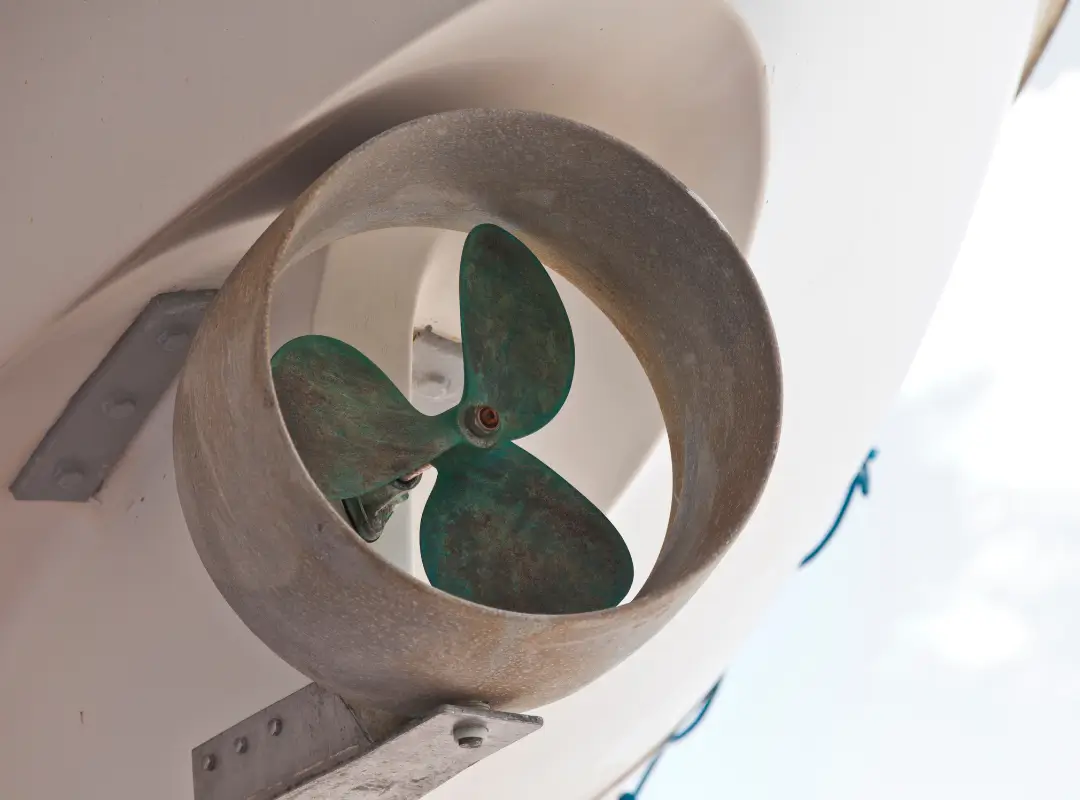
Aluminum Prop vs. Stainless Steel Propellers
Most manufacturers offer props in either aluminum or stainless steel.
Aluminum Propellers
An aluminum prop is generally cheaper and lighter. Many boaters choose them because they are affordable to replace. However, aluminum is soft. If you hit a rock or an oyster bed in shallow water, the blades will bend or chip easily. While this might save your lower unit gears from absorbing the shock, it means you will need to replace props frequently.
Stainless Steel Propellers
Stainless steel propellers are the superior choice. They are far more durable and can withstand minor impacts with mud or sand without deforming. Because steel is stronger, the blades can be made thinner, reducing drag and improving water flow.
Plus, stainless steel props hardly flex under load. This rigidity translates to better acceleration and bite, which is crucial when you need to jump on a plane in two feet of water.
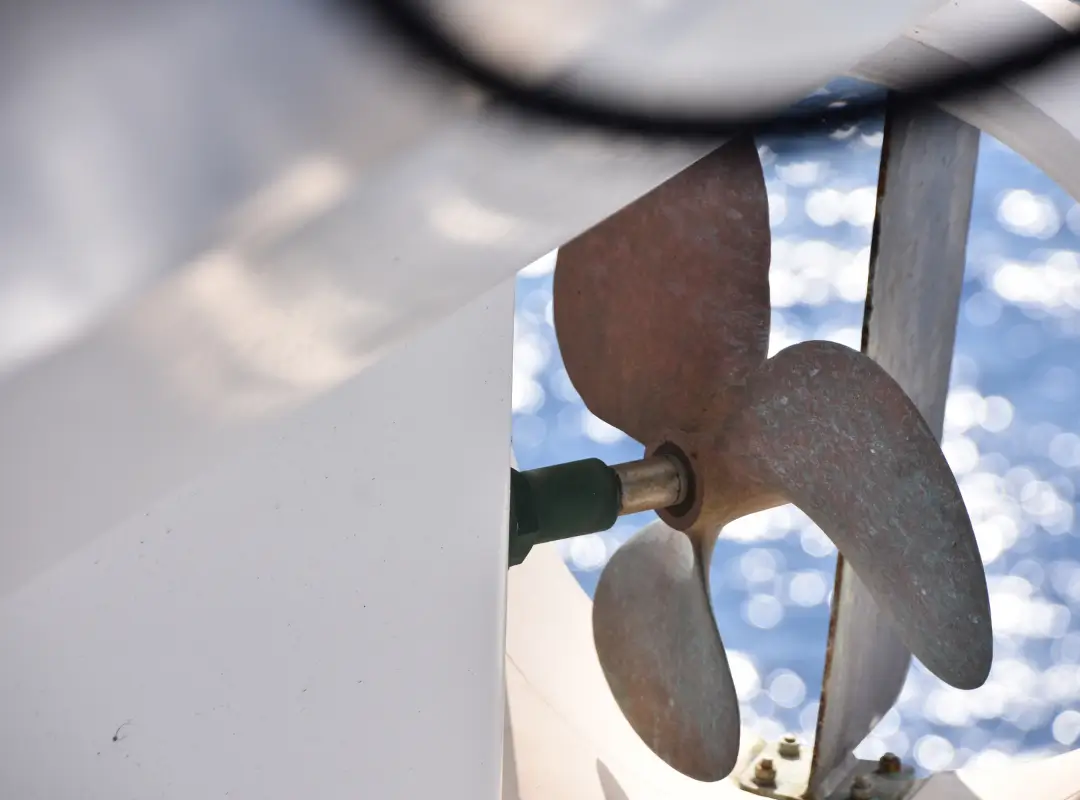
Propeller Pitch for Shallow Performance
Propeller pitch is defined as the theoretical distance a propeller moves forward in one rotation. Choosing the correct pitch is vital for matching engine speed to the boat’s speed.
Too Little Pitch
If you have too little pitch, your engine might over-rev, hitting the limiter before you reach a decent speed. While this gives you an incredible hole shot, it kills your top-end speed and hurts fuel efficiency.
Too Much Pitch
On the flip side, too much pitch is like trying to start a car in third gear. The engine struggles to reach its recommended RPM range, leading to sluggish acceleration. In shallow water, this is dangerous because the boat stays too deep in the water while trying to get on plane.
The Sweet Spot
For shallow water, you generally want to lean slightly towards a lower pitch than you would for deep water cruising. This sacrifices a bit of top speed (maybe 2-3 mph) but gives you the immediate thrust needed to lift the hull quickly. You want a prop pitch that allows your engine to reach the top of its recommended RPM range at wide-open throttle (WOT) with a typical load.
3 Blade VS 4 Blade
When discussing blade count, the debate usually centers on 3 or 4 blades.
3-Blade Props
These are the standards for general use. They offer higher top speeds because there is less drag in the water. If you are running long distances across deep bays, a 3-blade prop is great.
4 Blade Props
For shallow water, 4-blade props are almost always the winner. Here is why:
- More Surface Area: 4 blades provide more surface area in the water. This equals more thrust and better grip.
- Stern Lift: A 4-blade prop provides significant stern lift. It pushes the boat’s tail up, helping the hull run shallower.
- Hole Shot: With more grip, you get on plane faster.
- Handling: They offer better handling at slower speeds and in rough water, keeping the boat planted without sliding in turns.
While you might see a slight drop in top-end speed compared to a 3-blade setup, the trade-off for lift and acceleration is worth it.
Matching Engine Power to Boat Types
Every boat is different. A heavy fiberglass bay boat needs a different prop setup than a lightweight aluminum skiff.
Heavier Boats
Heavier loads require props with large blade surface areas and lower pitch to generate the necessary lift. You need that initial torque to get the mass moving.
Performance Boats and Skiffs
Lighter hulls can get away with higher or lower pitch props because the engine doesn’t have to work as hard to push them. However, for shallow water, you still prioritize a hole shot.
Also, consider your engine power. A 250HP outboard has the torque to spin a larger diameter prop than a 90HP motor. You must ensure the prop diameter and pitch are matched to the engine’s power curve to avoid under-revving or lugging the motor.
Frequently Asked Questions
What Is The Best Hull Design For Shallow Water?
Flat-bottom boats and tunnel hulls are generally the best designs for shallow water. A flat bottom has the least draft, allowing it to float in very little water. Tunnel hulls channel water to the prop, allowing the motor to be mounted higher, which further reduces draft while running.
Which Is Faster, a 3-blade or a 4 Blade Prop?
A 3-blade prop is typically faster at the top end. Because it has one less blade, it creates less drag in the water, allowing for higher engine speeds. However, a 4-blade prop usually offers better acceleration and cruising efficiency, making it faster out of the hole.
What Is The Most Efficient Propeller Design?
Efficiency depends on the goal. For cruising at high speeds, a stainless steel 3-blade prop with high rake is often most efficient. For shallow water or heavy loads, a 4-blade stainless steel prop is more efficient because it reduces slip and keeps the boat on plane at lower speeds.
What Pitch Prop for a Better Hole Shot?
To get a better hole shot, you should choose a lower-pitch prop. Lowering the pitch increases the engine’s RPM faster, providing more immediate torque and thrust to lift the boat onto the plane. Ideally, drop the pitch by 1 or 2 inches to see significant improvement.
Conclusion
You are trading a little bit of top-end speed for essential lift, acceleration, and grip. For most boaters operating in skinny water, a stainless steel, 4-blade propeller with moderate pitch and good cupping is the gold standard.
Remember: A well-propped boat is a safe and efficient boat. Don’t settle for “good enough” when a simple prop change can completely transform your ride.
Upgrade Your Propeller Game with Prop Depot!
If you’re serious about mastering shallow water, Prop Depot in Tennessee has you covered. Our selection of new propellers and repair services includes everything from high-performance Mercury and ACME stainless steel props to durable Cruiser and general-use aluminum options. Stop by our Tennessee location or give us a call to explore our inventory.