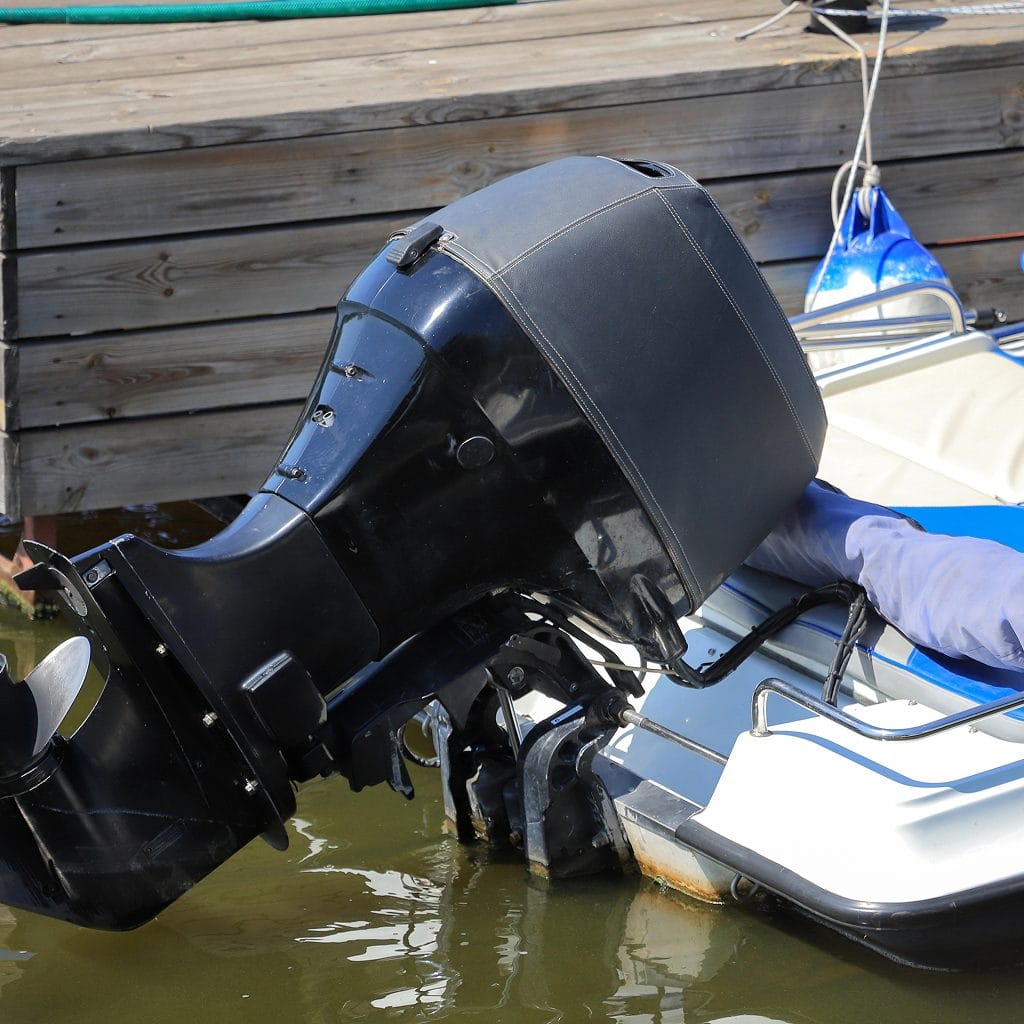
What Tools Do I Need for Proper Propeller Maintenance?
If you want a long lifespan for your propeller, regular maintenance is the answer. But to do the job right, you need more than just good intentions; you need the right set of tools. So, what tools are essential for proper propeller maintenance? You don’t need a professional-grade workshop, but having a few key items on hand can make the difference between a quick fix and a costly trip to the shop.
Tools to Visually Inspect Your Boat Propeller
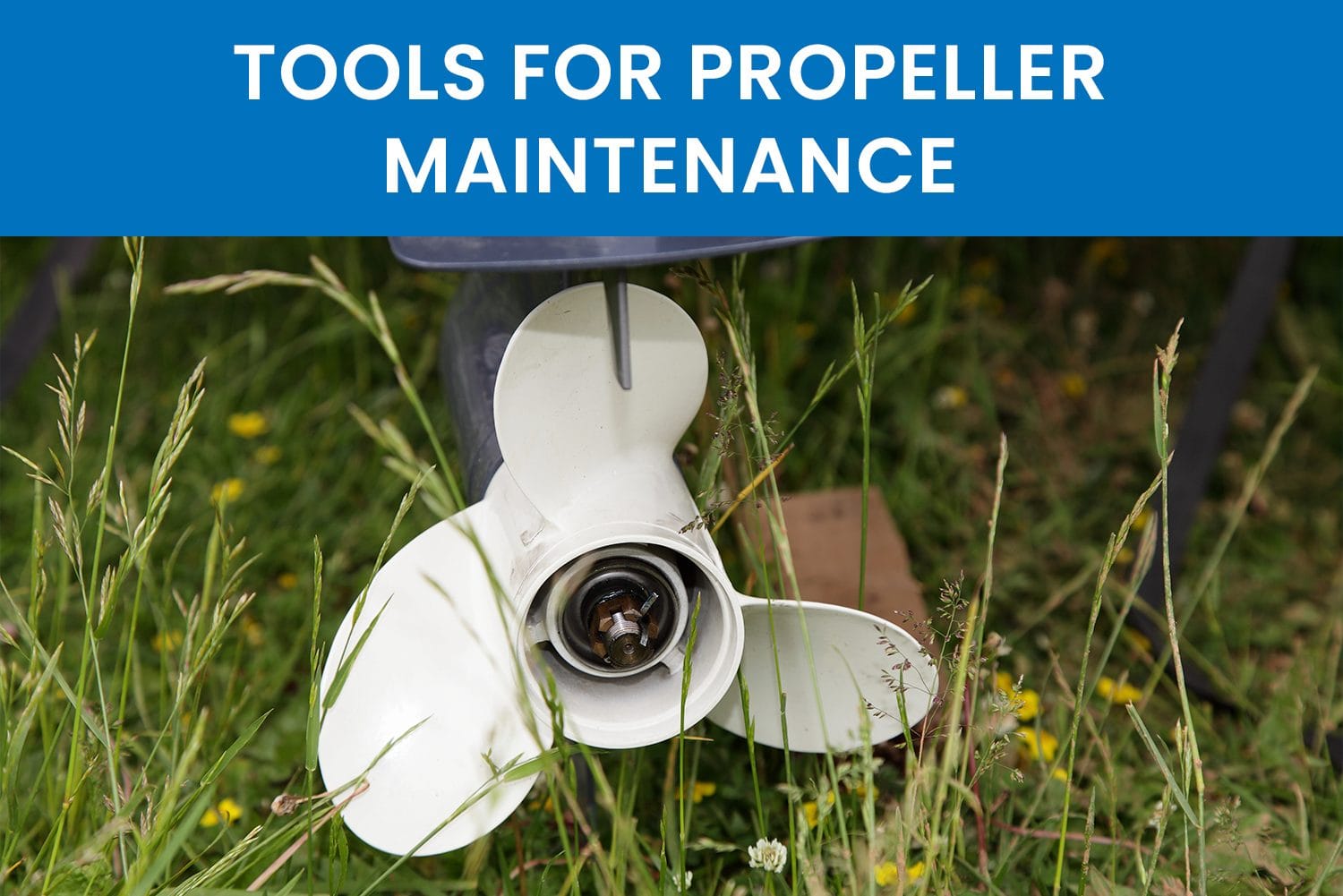
After choosing the right propeller, the most important maintenance you can perform is a regular visual inspection, and a few simple tools make this process much more effective:
A Good Light Source is Non-Negotiable
Many issues, like fine cracks or the early signs of corrosion, are nearly impossible to spot in the shade under your boat. A powerful light allows you to illuminate every inch of the propeller blades and hub.
Magnifying Glass for a Closer Look
For small nicks and potential stress cracks, a magnifying glass can reveal damage that is invisible to the naked eye. This is especially useful for inspecting the leading edge of each blade, where small impacts often occur.
A Stiff-Bristle Brush
You need a brush to scrub away debris that obscures the surface of the blades. It’s critical to use a stiff plastic or nylon bristle brush. A wire brush is too aggressive and can scratch the surface of your propeller, creating new places for rust and corrosion to start.
Tools for Propeller Removal & Replacement
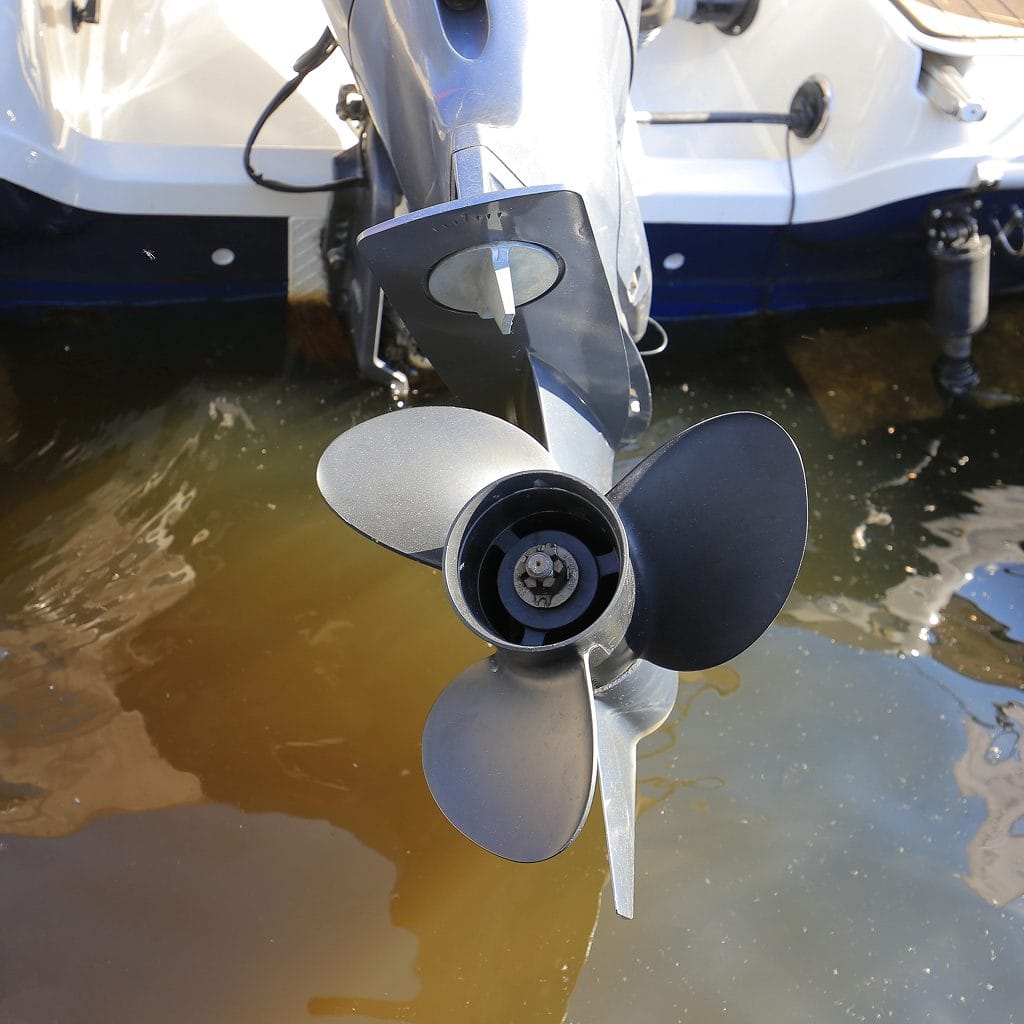
Sooner or later, you will need to remove your boat propeller. Having the right tools for removal makes this a 15-minute job:
The Prop Wrench
This is the most important tool for propeller removal. A propeller wrench is designed to fit your specific prop nuts. While you might be able to use a large socket wrench, this has a long handle for better leverage. Plus, many are designed to float, which is a lifesaver if you accidentally drop one in the water.
A Block of Wood for Leverage
The safest way to stop the propeller spin when you are using a wrench is to wedge a sturdy block of wood (a 2×4 works perfectly) between one of the propeller blades and the anti-ventilation plate on your outboard or sterndrive. Never hold the blade with your hand; one slip could cause a serious injury.
Always Have a New Cotter Pin
Never, ever reuse an old cotter pin. They are made of soft metal, designed to be used once. Reusing a fatigued cotter pin risks it failing, which could allow your propeller nut to loosen and your entire propeller to fall off the shaft. A new cotter pin costs pennies and is cheap insurance.
Fine-Grit Sandpaper or Emery Cloth
After filing, use a 220 or 400-grit wet/dry sandpaper to smooth the repaired area. This ensures a smooth, hydrodynamic surface that won’t disrupt water flow. Here’s a complete guide to change a boat propeller.
The Prop Puller
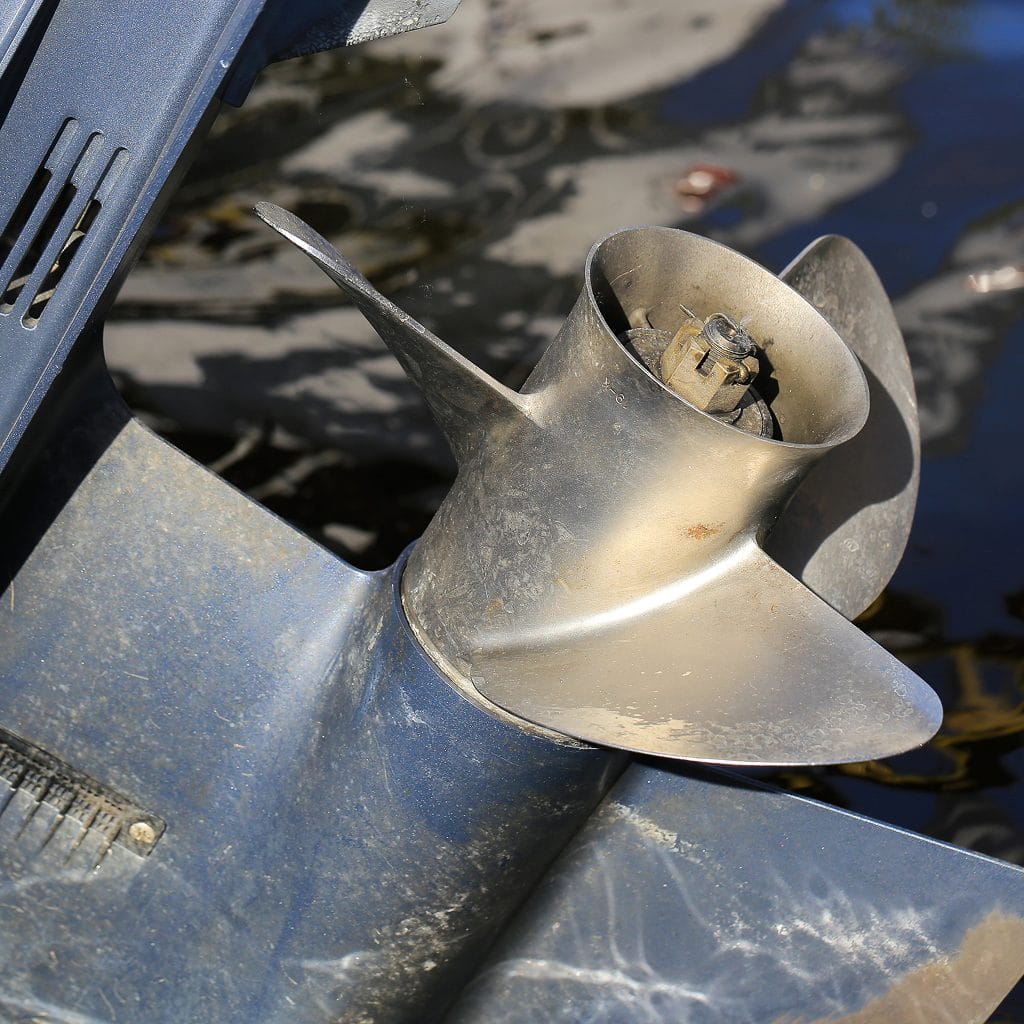
A prop puller is a tool that uses mechanical force to safely press the propeller off the shaft without damaging the prop or its internal components. It typically bolts to the hub and uses a large center bolt that pushes against the end of the propeller shaft.
For outboards and sterndrives, it’s a good idea to have one if you operate in saltwater or if you haven’t removed your prop in a long time. Trying to hammer a stuck prop off can damage the blades, the hub, and even bend the prop shaft or damage the gearcase seals. One mistake here could lead to thousands of dollars in repairs.
For anything more than a very minor nick, like visible cracks, a bent blade, corrosion, too much debris, or significant missing material, the only tool you need is your phone to call a professional prop shop.
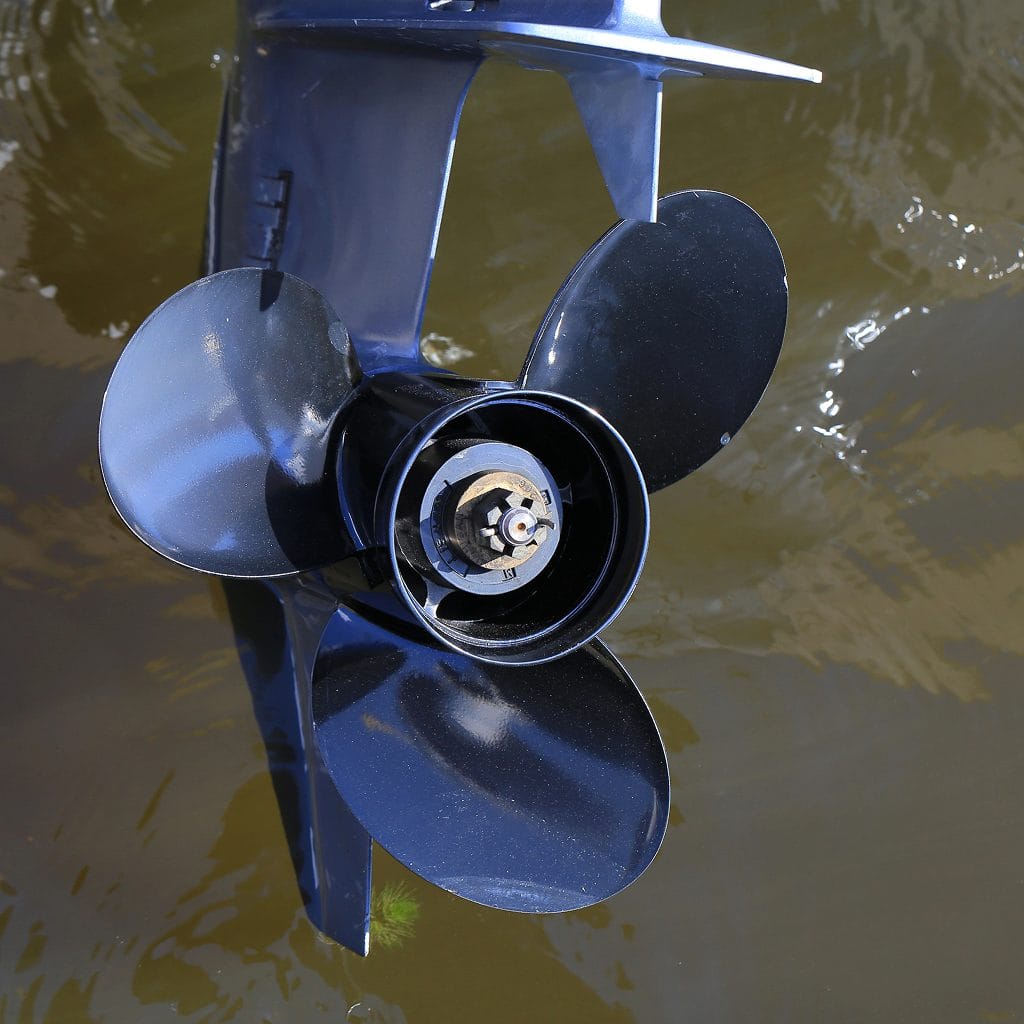
Essential Supplies for Complete Propeller Maintenance
Beyond the hard tools, a few key supplies are necessary to protect your propeller and its related components.
- Marine-Grade Grease: Before you reinstall your propeller, you must coat the propeller shaft splines with a high-quality marine grease. This waterproof grease prevents corrosion and ensures you’ll be able to get the prop off again next time.
- Cleaning Agents: Have a good boat soap and some degreaser on hand. A clean propeller is easier to inspect and performs more efficiently. Remember to rinse thoroughly with fresh water after cleaning, especially after operation in saltwater.
- A Fresh Coat of Paint: For aluminum or steel propellers, a fresh coat of the right paint can be a great layer of defense against corrosion. If you’ve made a repair, touching it up with a zinc-chromate primer followed by a quality marine enamel will protect the bare metal.
Final Thoughts
Proper propeller maintenance is a cornerstone of safe and efficient boating. Having the right collection of tools gives you control of your vessel’s performance. It allows you to handle the small stuff, like cleaning away debris or dressing a minor nick, and to spot bigger problems before they lead to a ruined day on the water. A small investment in these tools will pay for itself many times over in improved performance.
Equip Your Boat with Best Propellers
Having the right tools keeps your propeller in top shape; but even the best maintenance routine starts with quality equipment. Prop Depot offers a complete selection of Mercury aluminum propellers built for smooth operation and long-term reliability. Our Boat Propellers are lighter than stainless steel and easier to maintain, making them an ideal choice for recreational boaters who want dependable performance without the high upkeep. Contact us now!