Google Shopping Exceptional Rating
Will a 4-Blade Propeller Improve My Boat’s Acceleration?
If you want to improve the boat’s performance, you should change the propeller blade. More likely, it is the first thing boaters consider when they want a better hole shot, improved handling, better fuel economy, or top speed. This naturally leads to the classic debate: 3-blade versus 4-blade. The common wisdom is that adding an extra blade will give you a major jump in acceleration. But is it really that simple?
More Blade Area, More Grip = Higher Speeds
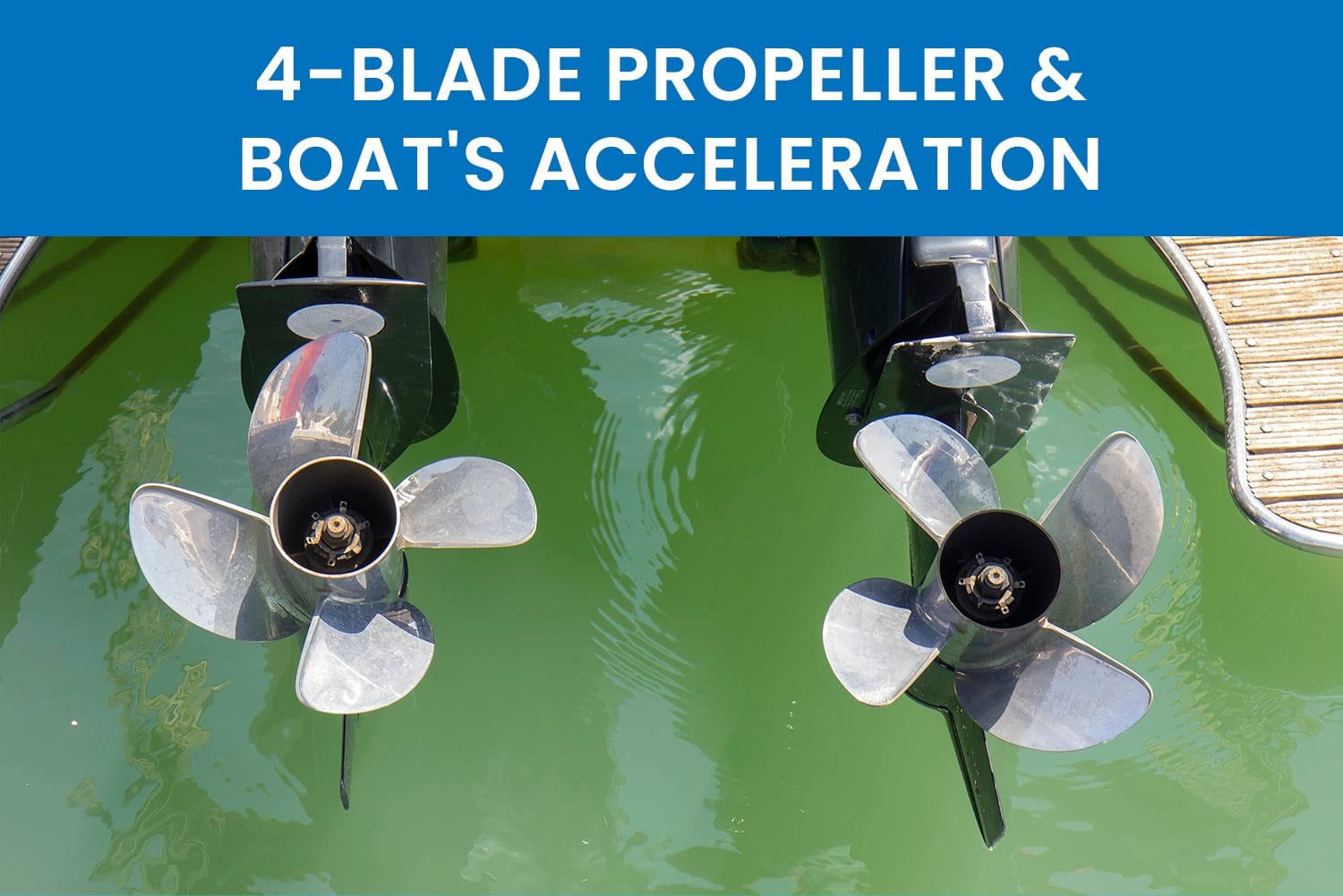
The difference between a 3-blade and a 4-blade propeller comes down to blade area. When you add an additional blade to the hub, you increase the total surface area that grips the water. Think of it like swapping the tires on your car. A wider tire has a larger contact patch with the road, providing better grip for acceleration. Same for Propeller.
A 4-blade prop has more blade area in the water at all times. Hence, it can transfer engine power into thrust more efficiently. The result? A stronger and quicker hole shot, getting your boat on plane faster.
But, just like wider tires on a car can reduce top speed because the friction is now increased, the additional blade on a propeller creates more drag in the water. Consequently, you will almost always see a slight drop in your top-end speed when switching to a 4-blade prop of the same pitch. But yes, the acceleration will surely increase. Here’s the complete guide to change the boat propellers.
When Does a Four-Blade Propeller Work Best?
So, if you get better acceleration but potentially lose top speed, when is it the right choice? The answer depends entirely on how you use your boat and what you want to achieve. Here’s when a 4-blade propeller is better:
For the Water Sports
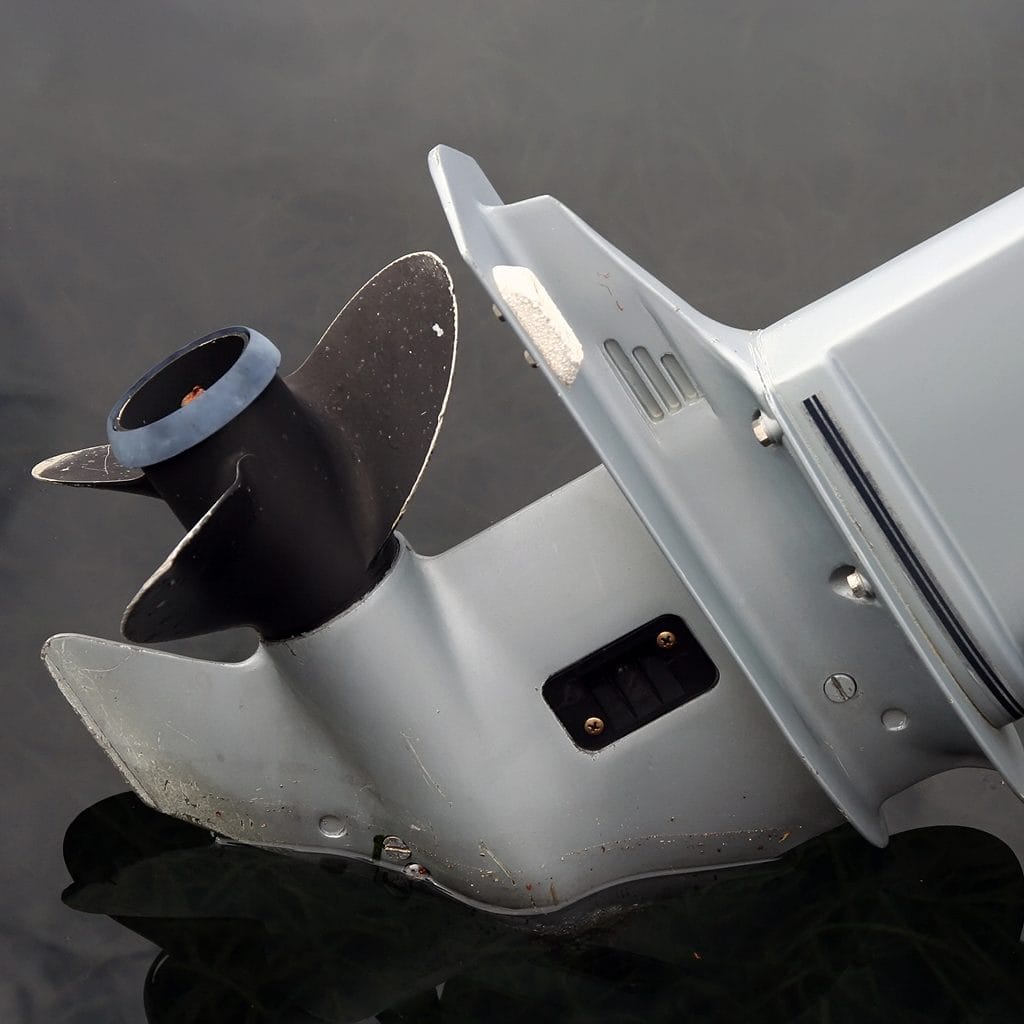
A better grip of a 4-blade propeller provides the low-speed thrust needed to pop skiers and wakeboarders out of the water with less effort and less bow rise. Your engine won’t have to strain as hard, and the rider gets a much smoother start.
Once on a plane, 4-blade props are also better at maintaining a constant speed at lower engine RPM. This is ideal for wakeboarding, where holding a precise speed (e.g., 22 MPH) is crucial. A 3-blade propeller might require constant throttle adjustments to stay on plane at lower speeds, while a 4-blade design can hold that plane more easily and with reduced vibration. Here’s the complete guide for propeller installation.
For Better Cruising & Fuel Efficiency
While you may lose some top-end speed, the efficiency gains are often found at your typical cruise speed. Because the prop is more efficient at lower and mid-range RPMs, you may find that you can maintain your desired cruising speed at a lower engine RPM. For example, you might be able to cruise at 30 MPH at 3500 RPM with a 4-blade prop, whereas your 3-blade prop required 3800 RPM to hold the same speed.
Running the engine at a lower RPM to maintain the same speed directly translates to lower fuel consumption. If you spend most of your time cruising rather than running at wide-open throttle, you could see a noticeable improvement in your boat’s fuel economy, sometimes in the range of 5-10%.
What Do You Give Up with a 4-Blade Prop?
The biggest and most talked-about trade-off is top speed. Why? More drag from the additional blade means your engine has to work harder to reach its maximum RPM range. In most cases, you can expect to lose 1 to 3 MPH off your top-end speed when switching from a 3-blade to a 4-blade prop of the same diameter and same pitch.
Because of the increased load on the engine, switching to a 4-blade prop often requires a drop in propeller pitch to allow the engine to reach its recommended wide-open-throttle (WOT) RPM range. A general rule of thumb is to decrease the pitch by 1 or 2 inches when going from a 3-blade to a 4-blade design. For example, if you are running a 19-pitch 3-blade prop, you would likely need a 17 or 18-pitch 4-blade prop to achieve similar engine performance.
3 Blades vs. 4 Blades
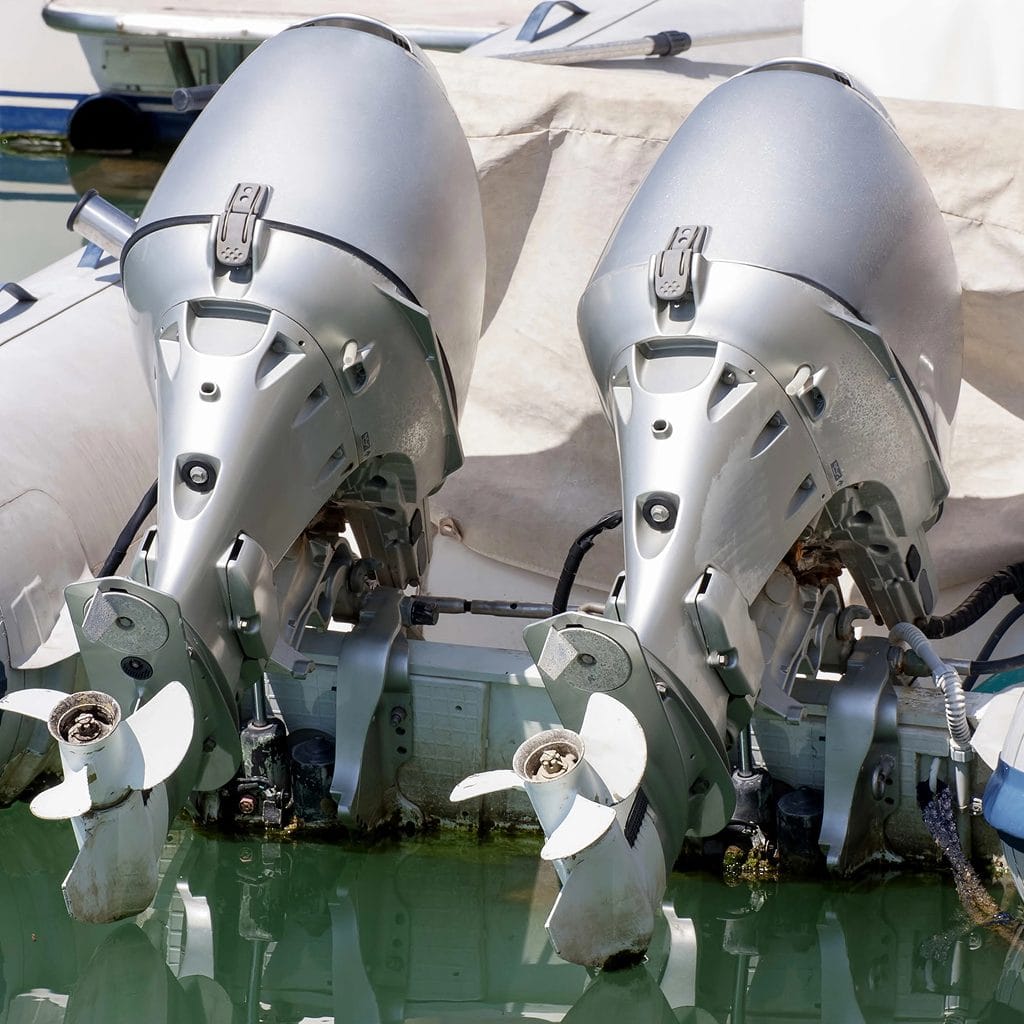
Three-Blade Propeller: Good for Top Speed
With less drag, a 3-blade prop allows the engine to rev higher and achieve the best possible top speed. If making your boat faster is your number one goal, this is usually your best bet.
For many recreational boaters with lighter boats, a 3-blade prop provides a perfectly acceptable hole shot, good cruising efficiency, and excellent top-end performance. It’s the jack-of-all-trades in the propeller world.
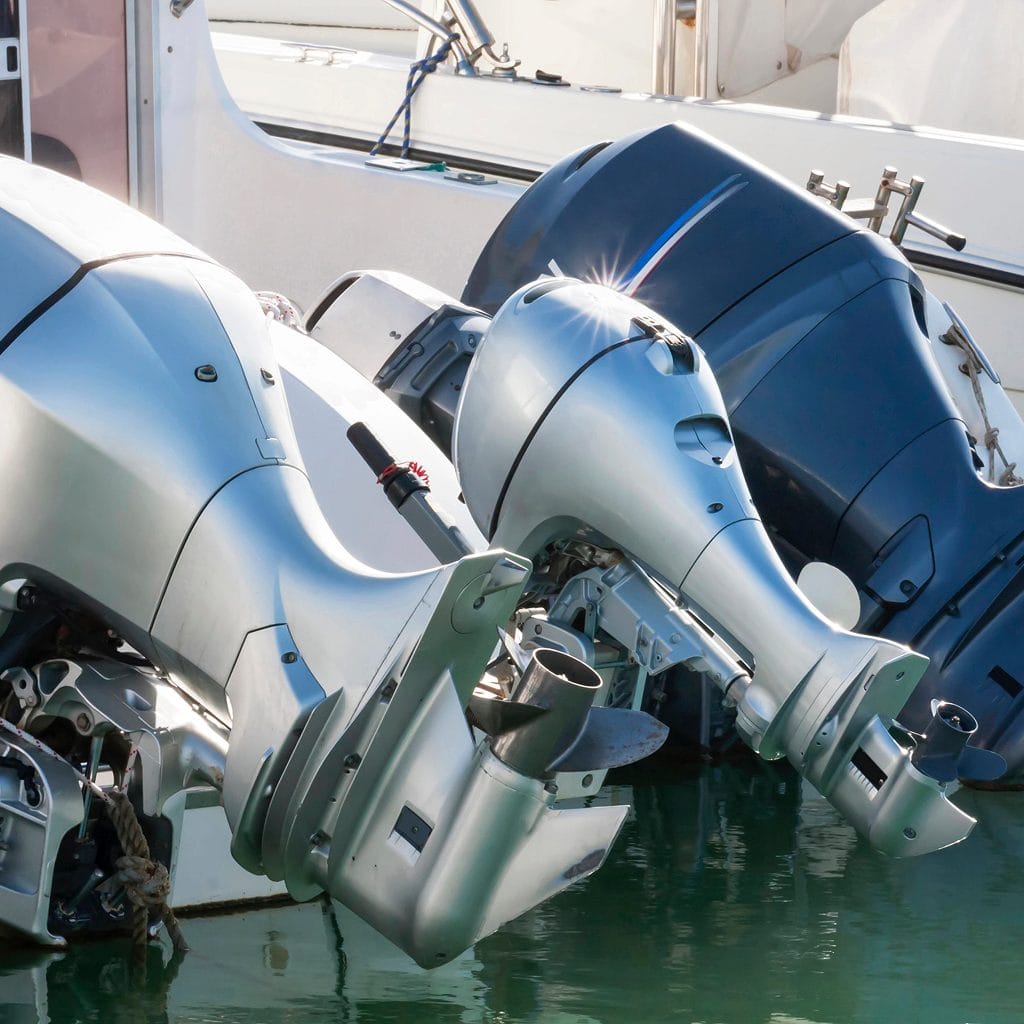
4-Blade Propeller
A 4-blade propeller is more of a specialist, excelling where the 3-blade design might fall short:
- Superior Acceleration because of the wide propeller design and area
- With more blades in the water at any given time, 4-blade props tend to run smoother with reduced vibration, especially at lower speeds.
- More grip translates to better cornering and less ventilation in rough seas.
- Gets heavy boats on the plane with authority.
Final Thoughts
So, will a 4-blade propeller improve your boat’s acceleration? Absolutely. But the real question is whether those benefits outweigh the inevitable loss of top-end speed. To make the right choice, you need to be honest about how you use your boat. The best prop design is the one that best matches your boat, your engine power, and your specific needs on the water.
Discover the Perfect Aluminum Propeller for Your Boat
Not every boater needs a high-end stainless steel propeller. Sometimes, the best performance upgrade comes from the right aluminum propeller, and that’s where Prop Depot steps in. Our wide selection of boat propellers offers the best performance without the premium price tag. And with options for cruiser propellers, you can easily dial in the performance that best fits your boat and your goals. Not sure what to choose? Our expert team is always ready to help you pick the right prop for your engine and water conditions. Contact us now!