

How Much Does Propeller Rake Angle Affect Performance?
What Is the Rake Angle of a Propeller?
The rake angle is the angle at which the propeller blade leans backward from the propeller hub when viewed from the side. Instead of standing straight up from the hub, the blades lean aft. This lean is sometimes confused with the pitch, but they are very different measurements.
Pitch measures how far a propeller would move forward in one revolution along a straight line. Rake, on the other hand, describes the angle between the blade and the propeller shaft.
A propeller typically has a positive rake, meaning the blades lean back toward the trailing edge.
High rake props lean back more aggressively. Low rake blades stand more upright.
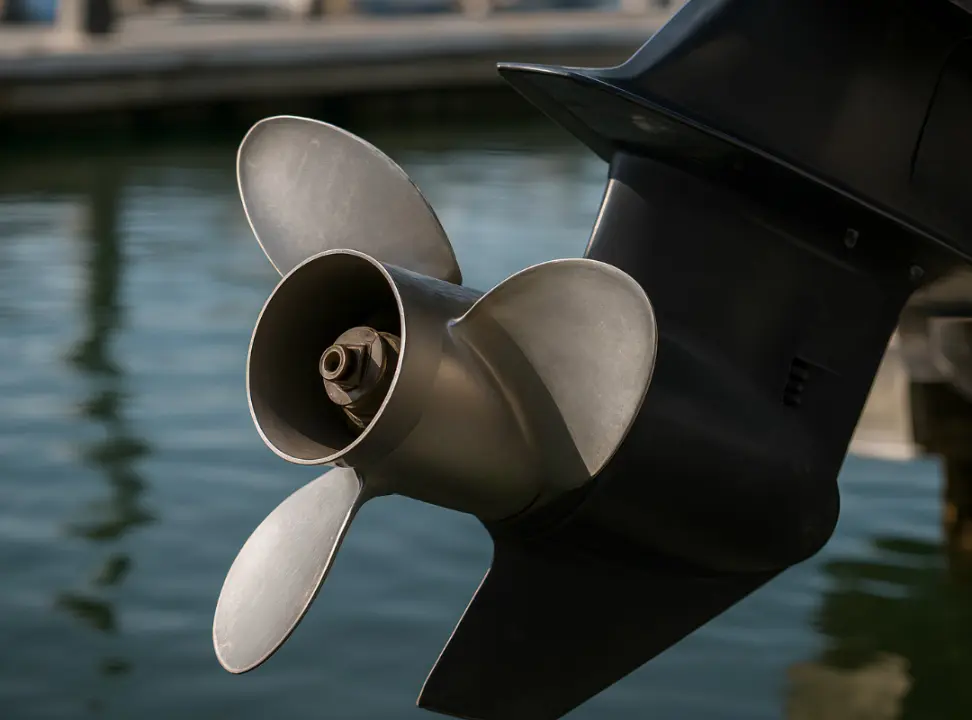
Some high-performance props also feature progressive pitch propellers, where the pitch increases progressively from the leading edge to the trailing edge, often paired with a high rake for added lift. The rake line and pitch line are separate concepts, but both influence the effective pitch and the overall thrust.
How Does Rake Affect a Propeller?
Rake directly affects lift. More specifically, it affects bow lift and stern lift. High-rake blades generally provide greater bow lift. When the blades lean back more, they redirect thrust slightly upward. This can lift the bow of the boat, reduce wetted hull surface, and frequently improve speed on performance hulls. At high trim angles, high-rake propellers running fully submerged can maintain water-gripping capability better than low-rake designs.
Low rake props, by contrast, tend to provide more stern lift and a flatter running attitude. That can help boats carrying heavy loads or boats that need superior planing performance during a hole shot.
In simple terms, rake changes how your boat rides on the water surface. It affects the balance between bow and transom lift, and that changes speed, efficiency, and handling.
Does High Rake Increase Boat Speed?
In many cases, a high rake can increase boat speed, but not always. High rake propellers are common on bass boats and other high-performance setups. When combined with elevated motor heights and proper trim angles, more rake can:
- Provide additional bow lift
- Reduce hull drag
- Improve top-end boat speed
- Help maintain grip at high engine elevations
That said, high rake does not automatically mean faster. If your hull does not respond well to additional bow lift, or if your engine cannot operate in its correct rpm range with that setup, you may lose performance instead of gaining it.
For boats that are typically carrying moderate to heavy loads, too much rake may lift the bow excessively, increasing slip or reducing hole shot. The result depends on hull design, engine horsepower, diameter, and overall setup.
This is where experienced propeller shops like Prop Depot can help. Our prop experts evaluate your hull, engine height, and performance goals before recommending a rake change. We cover secure, two-way shipping of your prop across the country, so get your prop shipped in today!
What Is the Optimal Angle for a Propeller?
There is no universal average angle that works for every boat. The optimal rake angle depends on how and where you run your boat. For example, boats running high trim or high engine elevations often benefit from high rake to maintain grip and provide additional bow lift. Performance hulls that benefit from lifting the bow out of the water surface tend to respond well to positive rake.
On the other hand, workboats or boats that frequently carry heavy loads may perform better with low-rake blades. A less rake can keep the bow from riding too high and may improve stability during boat acceleration.
Manufacturers like Mercury Marine design propellers with specific rake, cup, and diameter combinations to suit different applications. Many modern props combine positive rake with cupped propeller designs, where applying a cup at the trailing edge effectively increases pitch by about one inch, improving grip and thrust.
The key is balance. Rake works together with pitch, diameter, and cup. Changing one factor changes the whole equation. If you need professional guidance before you shop, the prop specialists at Prop Depot can help you choose the best new or used prop for your boat.
What Are the Effects of Rake Angle on Hole Shot & Lift?
Hole shot refers to how quickly your boat accelerates onto the plane. Rake angle plays a role here, too. A high rake can improve performance at speed but may sometimes reduce initial bite if not matched properly. Low rake blades often provide stronger stern lift, helping push the boat onto the plane more quickly, especially under heavy loads.
However, when paired with a proper cup and effective propeller pitch, high rake high-performance props can still deliver a strong hole shot while maintaining superior top-end speed.
Rake also affects how exhaust gases flow around the propeller hub. Certain rake and hub designs allow exhaust to ventilate more cleanly at launch, improving acceleration characteristics. In short, rake is an important factor in both slow-speed control and high-speed efficiency.
When Should You Consider Changing Rake?
If your boat struggles with bow lift, porpoising, excessive slip at high trim, or inconsistent speed at elevated motor heights, rake could be part of the issue.
Similarly, if your boat with a propeller setup feels planted at the stern but slow to reach top speed, adjusting blade rake might help improve performance. Before replacing a prop, check:
- Wide open throttle rpm
- Trim response
- Load conditions
- Current pitch and diameter
Sometimes a cupped propeller with slightly more rake can provide additional bow lift without requiring a significant increase in pitch. For more personalized guidance, top brands, propellers, or expert prop repairs, contact Prop Depot now!

Conclusion: Is Rake Angle a Major Performance Factor?
Yes, rake angle significantly affects boat speed, lift, and overall propeller performance. It influences how the hull rides, how efficiently thrust is applied, and how the boat responds to trim.
But rake should never be evaluated alone. It works in combination with pitch, diameter, cup, engine height, and hull design. The right rake for one boat may hurt performance on another.
If you’re looking to improve performance, increase boat speed, or adjust lift characteristics on Tennessee waters, it’s worth reviewing your current setup before making changes.
Contact Prop Depot for Prop Sales & Repairs Today
If you want expert guidance, Prop Depot specializes in boat propeller repairs, performance evaluation, used props, and new prop sales. We serve boat owners across the country, helping with stainless and aluminum propellers and custom recommendations based on hull and engine setup. To shop a boat prop, contact us at (865) 673-8171 or ship in your prop for expert repair today!
FAQs
Below, we’ve addressed some frequently asked questions about propeller rakes.
Q: How does rake affect a propeller?
A: Rake affects how much bow lift or stern lift a prop provides. High rake blades typically provide higher bow lift and can improve speed at high trim angles, while low rake blades may improve hole shot and stern lift.
Q: What is the optimal angle for a propeller?
Q: What are the effects of rake angle?
A: Rake angle influences lift, trim response, thrust direction, water gripping capability, and overall propeller performance, especially at high engine elevations.
Q: What are the factors affecting propeller performance?
A: Pitch, diameter, blade design, cup, rake angle, engine horsepower, trim angles, hull type, and load all affect a propeller’s performance.